

Indigenous communities have relied on chokecherries for medicine, food, and tools, with its role sustaining through winter, supporting digestive and respiratory health, and providing wood and dye. The chokecherry’s versatility is the result of accumulated wisdom over thousands of years, including knowledge of when to harvest, how to prepare, and its many uses and symbolic significance. Indigenous communities revere the chokecherry, viewing it as kin rather than a commodity, a transcendence beyond the practical value of a food source, a living relationship grounded and built on mutual care and reciprocal exchange between people and land.
Legendary Lessons of the Chokecherry
The chokecherry appears across many Indigenous legends. In the Pacific Northwest and Nez Perce stories, Coyote and chokecherry appear during periods of rupture. In one tale from the Pacific Northwest, prior to defeating a monster that threatens to end salmon, Coyote repairs Magpie’s broken wing with chokecherry wood. The ending explains how the Pacific Northwest landscape was created (Salmón, 2020). In a Nez Perce legend, Coyote uses wood from a chokecherry tree to mend Meadowlark’s broken leg and proceeds to defeat a monster and create the people of the Sahaptin region. In both legends, the act of repair precedes destruction, renewal, and creation. Chokecherry restores movement, provides guidance, and nurtures the continuity of life (Heart of the Monster—Coyote and the Monster of Kamiah, 2010).
Other legends further illustrate the power of chokecherry, revealing the multiplicity of roles.
In a Northern Paiute legend, Bear’s obsession with chokecherry becomes his downfall when Coyote, with intimate knowledge of the land’s rhythms and the capacity to serve justice and balance, exploits it, luring the bear to a chokecherry bush to avenge his son’s murder. Among the Pit River Tribe, the fox uses chokecherries to lure Coyote astray (Salmón, 2020). A Sioux legend tells of six boys who discover a medicine woman’s grave hidden beneath chokecherry bushes, where the plant marks sacred boundaries and commands respect (McLaughlin, 1916).
Chokecherry embodies teachings interconnected through knowledge systems that have sustained Indigenous peoples. It reveals how one plant serves many roles, as medicine, food, structural material, spiritual guide, and a keeper of sacred space. The teachings underlying are about respect, reciprocity, and restoration that must precede renewal.
Chokecherry as Living First Food and Medicine
Within the Yakama Nation, chokecherry maintains a vital role among the community’s recognized First Foods. It is honored alongside other ceremonial sacred foods such as salmon, water, roots, and berries. Chokecherry is celebrated with specific songs and prayers. Seasonal harvesting in ancestral valleys exemplifies the intergenerational transmission of ecological knowledge and reinforces principles of respect, reciprocity, restoration, and protection. The continued use of chokecherry for its healing properties is evident in traditional healing practices, which are passed down through generations and continue to connect cultural and physical well-being.
Characteristics
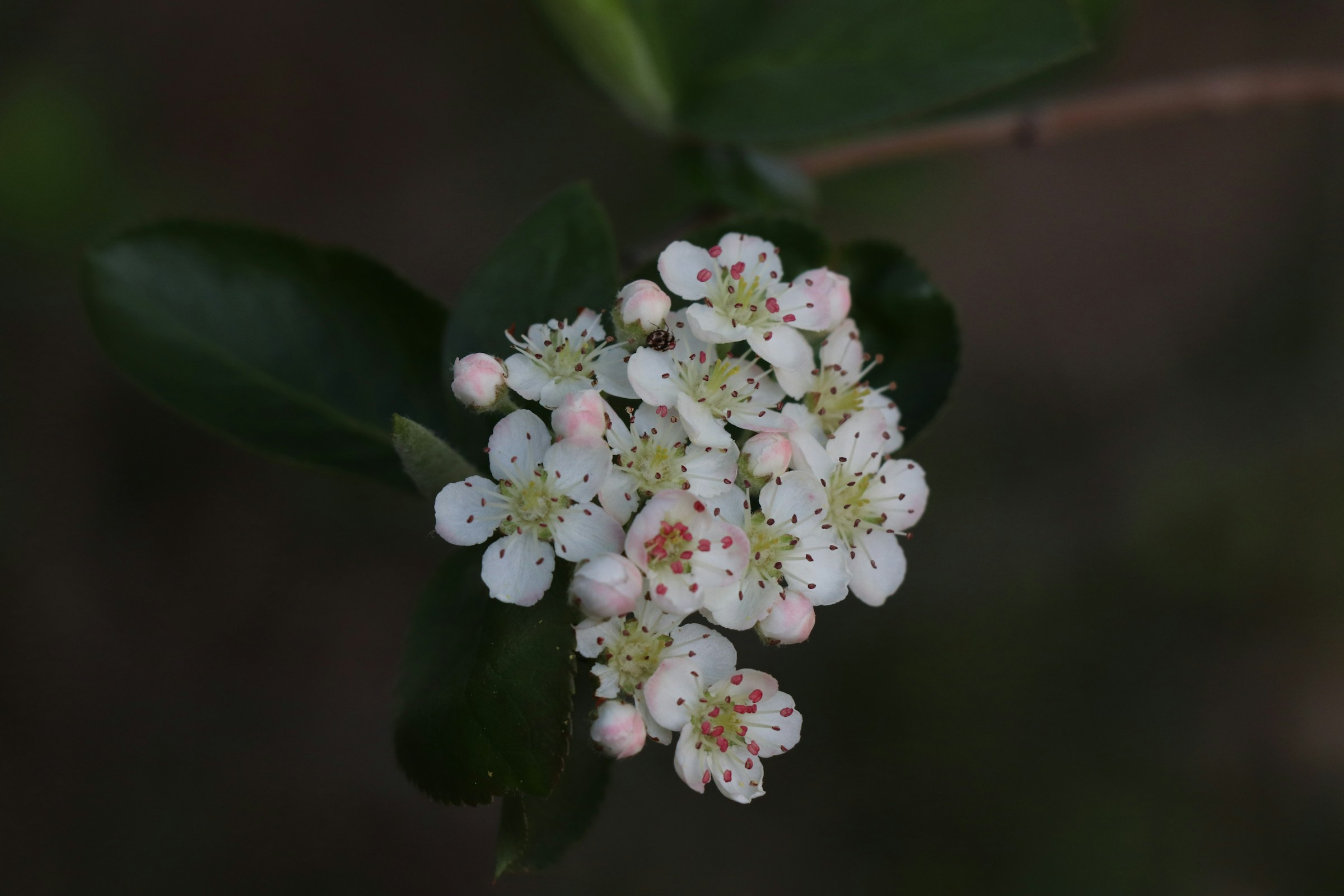
A deciduous shrub, 3 to 10 feet high, with alternate, broadly oval, pointed, toothed leaves. The small, whitish, flowers grow in elongated clusters and develop into round, bright red to purplish black fruits with large stones. Choke cherry grows in thickets, ravines, sandy and rocky areas, and wood- lands (Korn & Ryser, 2010).
The roots can reach roughly 35 feet out and about 6 feet deep, helping the plant spread widely in an area (University of Alaska Anchorage, Alaska Center for Conservation Science, 2011; United States Department of Agriculture, Natural Resources Conservation Service, 2004). Its close-grained, hard wood resists burning and provides flexibility for tools, while the extensive rhizomatous root system excels at erosion control and ecosystem stabilization (Salmón, 2020; Washington College, n.d.).
Uses: Choke cherries are eaten fresh, cooked, or dried. They are easy to harvest and ripen in August and September. Traditionally, they are crushed with fat, dried bear, or elk meat. They are also dried in large quantities on mats in the sun and saved for winter use.
Dried cakes are also eaten with fish or as a dessert. Choke Cherries are also commonly used to make juice, jellies, and wine (Salmón, 2020).
Chokecherry as a Staple Food
Chokecherries are a vital food source, and historically significant especially for Native American tribes, particularly those on the plains and prairies (Lewis-Clark.org, n.d.; Keeler, 2016; USDA, n.d.; Salmón, 2020). Choke cherries are eaten fresh, cooked, or dried. They are easy to harvest and ripen in August and September (Korn & Ryser, 2010). Though tart and bitter when raw, cooking or drying sweetened the fruit, removed astringency, and neutralized toxic compounds (Keeler, 2016; USDA, n.d.; Salmón, 2020).
The most important use was in pemmican, where berries were pounded, dried, and mixed with dried meat and fat to create a nutritionally complete winter food that sustained all plains tribes (Lewis-Clark.org, n.d.; Keeler, 2016; USDA, n.d.; Salmón, 2020; Native Memory Project, n.d.). For storage, berries were mashed with seeds into a paste, molded into patties, and sundried, or pressed into cakes as the Jicarilla Apaches did for winter use (Native Memory Project, n.d.; American Indian Health and Diet Project, n.d.). Fresh preparations included jams, jellies, syrups, and chokecherry butter made by cooking the fruit with wild plums or crabapples and sugar (Keeler, 2016; USDA, n.d.; Salmón, 2020). Different tribes developed distinctive dishes: the Ojibwa combined them with meat in soups, the Navajo cooked them with cornmeal, and many added them to stews as flavoring and thickening agents (Keeler, 2016; USDA, n.d.; Salmón, 2020). The berries were also used to infuse wines and spirits, a practice documented during the Lewis and Clark expedition (Lewis-Clark.org, n.d.). This culinary knowledge represents generations of refinement, transforming a bitter wild fruit into nutritious preparations that remain valued in traditional foodways today.
Medicinal and Healing Properties
Indigenous peoples across North America have used chokecherry for medicinal purposes, with the plant serving as a comprehensive pharmacy. It is good for high blood pressure, heart problems, stomachaches, diarrhea, and flus. A tea made from the leaves, stems, bark and roots, is beneficial for loosening phlegm in the throat– the fruit has been used extensively for trade as a cough medicine(Korn & Ryser, 2010).
This plant contains powerful astringent, anti-inflammatory, and antibacterial properties, along with high levels of antioxidants (Plants For A Future, n.d.; Salmón, 2020; Washington College, n.d.). Chokecherry medicine includes all parts of the plant—the roots, bark, inner bark, and berries—each recognized as medicinal, with every part contributing distinctly to healing and none regarded as expendable
The berries are rich in beneficial compounds–carotenoids, phenolic acids (chlorogenic, caffeic, and sinapic acids), and anthocyanins (cyanidin, delphinidin, and petunidin), contributing to the vibrant pigments that give the berries their dark purple color (Salmón, 2020). These properties can support cardiovascular health and treat certain forms of cancer. The woody parts contain healthy tannins (Salmón, 2020), and the plant also produces amygdalin and prunasin, compounds that, in small doses, can stimulate respiration and improve digestion (Plants For A Future, n.d.).
Respiratory: One of the most common and valued medicinal uses was the beneficial effect on the respiratory system (Plants For A Future, n.d.; Salmón, 2020). Used in tribes throughout North America for coughs, colds, and more serious respiratory ailments. The inner bark was dried and carefully peeled away from the outer bark, steeped into tea, and used for sore throats or general winter illnesses Native Memory Project, n.d.).
The Cherokee had sophisticated preparations they concocted; they boiled the bark to create an infusion used for coughs, laryngitis, chills, fevers, and to help loosen phlegm (USDA, n.d.; Salmón, 2020). Northern Plains tribes drank the juice of berries to relieve sore throats (Plants For A Future, n.d.; USDA, n.d.; Salmón, 2020). Some communities used innovative methods with one remedy prepared for head colds by grinding the chokecherry bark and smoking it like tobacco (American Indian Health and Diet Project, n.d.). Chokecherry was so effective that it was used to treat one of the most feared diseases in traditional times– tuberculosis (American Indian Health and Diet Project, n.d.).
Digestive: Chokecherry was also just as valuable for digestive issues. The Cheyenne created a specific preparation for diarrhea–they gathered immature, unripe fruit, sun-dried it, then ground and pulverized it into a fine meal that was taken as needed (USDA, n.d.; Salmón, 2020). The astringent properties of the berries, unripe, made them effective for this (Plants For A Future, n.d.).
The Sioux, Cros, and Gros Ventres, along with many other tribes, prepared bark tea to cure stomach aches, diarrhea, and, more severely, dysentery (USDA, n.d.; Salmón, 2020). The Cherokee boiled the fruit to treat bloody bowel movements (USDA, n.d.; Salmón, 2020). Potential side effects were also understood; willow tea was used to counteract excessive laxative effects from chokecherry preparations (USDA, n.d.). It also stimulated appetite and aided digestion, especially when used as powdered fruits (Plants For A Future, n.d.; Washington College, n.d.; American Indian Health and Diet Project, n.d.).
Wound Care/External applications: Root bark mixed with water was used as a rinse for skin ulcers and open sores–particularly valued treatment among the Cherokee (Plants For A Future, n.d.; USDA, n.d.; Salmón, 2020). The Sioux chewed dried roots and used the poultice in open wounds to stop bleeding (USDA, n.d.; Salmón, 2020). The Crows cleansed sores and burns with the bark (USDA, n.d.). The inner bark is applied externally to treat wounds, and the Flathead Salish used the bark’s resin to treat sore eyes (Lewis & Clark Foundation, n.d.).
Maternal Health: The Blackfeet made infusions of the cambium layer and mixed them with Saskatoon serviceberry as a purge treatment for lactating mothers. The medicinal properties were passed to the nursing babies. Nursing Blackfeet mothers would drink chokecherry tea to also pass the health benefits to their babies. The Cherokees used chokecherry tea for women during labor to help with pain and ease the birthing process (USDA, n.d.).
Historical accounts: Lewis and Clark recorded that Captain Lewis drank chokecherry tea from twigs to treat abdominal cramps and illness while camping in the upper Missouri River. He reported feeling better the following day (USDA, n.d.; Lewis and Clark Expedition Records, n.d.). 19th-century medical doctors used a concoction of chokecherry leaves and bark to treat debility, fever, whooping cough, tuberculosis, pneumonia, and gastrointestinal conditions. Also prescribed as a rinse on burns, open sores, and skin ulcers (Lewis and Clark Expedition Records, n.d.).
Recipe
Chokecherry Pudding
Serving Size: 6
Preparation Time: 0:10 minutes
- 1 ½ pints chokecherry—mashed
- ¾ cup hazelnuts—chopped
- 1 ounce agar
1. Pound most of the cherries, leaving some whole.
2. Place the cherries and the hazelnuts in a saucepan and heat to just before boiling.
3. Break up the agar seaweed in a small saucepan filled with 1/2 cup of water. Simmer until agar is dissolved. Add to the chokecherry mixture and bring to near boil.
4. Pour ingredients into a flat serving dish and let rest in the refrigerator for an hour or two.
NOTES: Serve warm or chilled. You may remove the pits if you wish, but they can be consumed whole. Be careful with raw pits, as they contain hydrocyanic acid.The acid should be leached or heated out. (Korn & Ryser, 2010)
Parts of this blog have been adapted from Preventing and treating diabetes naturally: The Native way by: Dr. Leslie Korn and Rudolph Ryser








Leave a Comment