

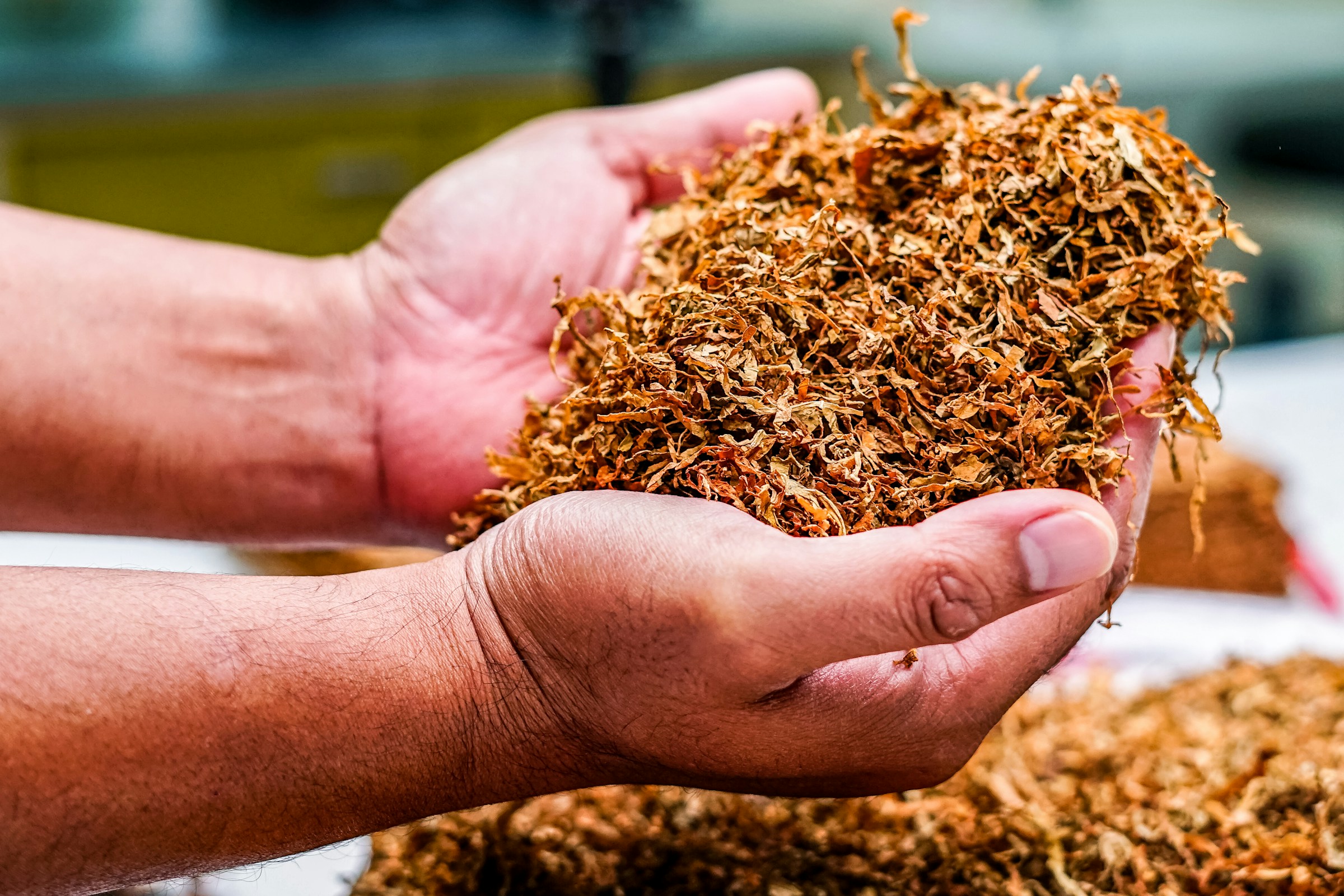
Ancestral Teachings and Traditional Tobacco Stories
Healing begins with a transformation of perspective and an expansion of one’s conceptual lens. This occurs through engagement with Indigenous oral histories, where understanding of tobacco’s significance and, consequently, the depth of loss caused by commercial appropriation can emerge. Drawing on An Anthology of Traditional Tobacco Stories (Columbia University School of Social Work & National Cancer Institute, 1992) sheds light on these oral legends, shifting the narrative to highlight the central role tobacco plays in healing and ceremonial life. This collection reveals the plant’s relational aspects and provides an alternative lens for understanding, tracing facets of Indigenous ways of knowing, and gradually illuminating the epistemic violence enacted through colonial distortions and disruptions.
Tobacco as an ancestral gift and carrier of prayers
Indigenous stories about tobacco are varied and symbolize many aspects of the plant’s sacredness, often describing its origin through elders, ancestors, or acts of sacrifice. In The Origins of Tobacco (Nipmuck) and The First Tobacco (Huron-Wyandot), Tobacco comes into being through legacy, ash, and gifting, and is brought into relation as a carrier of prayers that connects people to their ancestors and the spirit world (CUSSW & NCI, 1992). The fundamental lesson across these stories reveals the importance of reciprocity and the power of sustained responsibility, continual engagement, and commitment.
Within Anishinaabe teachings of the four sacred medicines (Mashkiki), Tobacco (Asema) is positioned toward the east and used for communication with the spirit realm (Great Lakes Inter‑Tribal Council, Inc., 2021).
Tobacco as Medicine, Protector, and Peacemaker
A tiny hummingbird emerges as the protector and rescues Tobacco in the Cherokee legend of Fire-in-the-Mouth to create a path toward healing and peace (CUSSW & NCI, 1992). Similarly, The Creek story of The Tobacco Warrior honors Tobacco as a relative whose first act is to bring peace and love. These legends reinforce the unifying medicinal qualities of Tobacco (CUSSW & NCI, 1992).
The magical and protective qualities of Tobacco are described in Delaware teachings, where it is respected as a sacred substance used in prayers and blessings for protection and the nurturing of a reciprocal relationship with spiritual beings (CUSSW & NCI, 1992).
Another lesson of sharing and respect is heard in the Abenaki story Gluskabe Stole Tobacco, which teaches lessons of communal care by revealing the importance and responsibility of sharing the power and magic of tobacco (CUSSW & NCI, 1992).
Knowledge, Multiplicity, and Relationship With the Plant
The Creation of Kinnickinnick (Chippewa–Lac du Flambeau) explores Wenebojo’s forest as it creates tobacco blends and shows the resourcefulness and multiple forms and functions of the medicinal plant, as well as the deep knowledge acquired through the relationship with the plant and the understanding of its healing practices (CUSSW & NCI, 1992).
Protocols, Stewardship, and Ceremonial Use
The Seneca Tobacco Gathering outlines protocols for harvest practices, emphasizing respect for natural elements and their relationship to land stewardship and energy. The narrative explains that thunderstorms signal the period when the plant possesses its greatest medicinal and spiritual potency (CUSSW & NCI, 1992). This timing is identified as optimal for gathering, highlighting the interconnectedness of natural forces and the balance of the land.
Some of the ceremonial and spiritual uses of tobacco also include offering before picking other medicines, root gathering, and berry picking (GLITC, 2021). This is a practice observed in Yakama protocols: always leave tobacco as an offering when taking medicine from the land or thanking an animal relative for their sustenance, such as salmon, deer, and elk. Other ceremonial uses include using tobacco during prayers and naming ceremonies, smudging people, places, or possessions for cleansing and purification, and offering tobacco as a sign of respect, to express gratitude, or to ask for prayers or guidance (Bosma et al., 2018).
Traditional Tobacco Components and Ceremonial Meaning
Building on these stories, Indigenous teachings emphasize the sacred and symbolic roles of each part of the Tobacco plant. These teachings illustrate how the plant’s physical components carry intention, prayer, and relational meaning within ceremonial practices. The Minnesota Tribal Tobacco projects (TPT, 2022) provide explanations for each part of the sacred plant and its ceremonial role:
Sacred Tobacco Components and Their Meanings
| Component | What It Is | Meaning / Symbolism |
| Outer Red Layer (Bark) | The outermost layer of the tobacco stalk or red willow used in traditional preparation. | Represents protection and the visible self. Removing it symbolizes preparation, respect, and intentionality before offering the plant in ceremony. |
| Inner Green Layer (Chinchasha) | The inner green part is exposed after scraping off the red bark. | Symbolizes the plant’s essence or “true self.” Connected to identity, integrity, and the effort put into preparation. Used in sacred ceremonies and offerings. |
| Leaves | The leaves of the tobacco plant. | Each leaf carries prayer and intention. Acts as a vessel to send words and offerings to the Earth, ancestors, or Creator. |
| Tobacco Ties (Bundles) | Small bundles of tobacco made for prayers or offerings. | Symbolize reciprocity and relationship with the plant. Placed at sacred sites or after prayer to honor the Earth and the spirit of the tobacco. |
| Use in Pipe or Ceremonial Form | Tobacco placed in a pipe or used in ritual practices. | Represents communication and connection with spirits and ancestors. Used for sending intentions, receiving guidance, and fostering peace. |
| Red Willow as a Base | Tobacco wrapped in red willow bark for ceremonial use. | Red willow is sacred and serves as a vessel for prayer. Offering it expresses gratitude to Mother Earth and the plant spirit for life and medicine. |
(TPT, 2022)
Within this historical account of Indigenous origins and meanings of tobacco, we gain an understanding of Indigenous teachings and protocols and establish Tobacco as a sacred relative rather than a commodity. This is a necessary foundation to ground the narrative and story of tobacco; it is required to understand how colonial extractivism distorted, but did not erase, Tobacco’s original role, and how the transformation into a harmful and addictive product represents obscuring medicine, but not eliminating it. In this context, the reclaiming is not symbolic or merely retrospective, but a necessary cycle of undoing and renewing, essential for cultural, spiritual, and public health restoration. In the second part of this series, we briefly revisit the colonial strategies only to contextualize the harm and present a shift toward Indigenous-led reclamation efforts and tribe-specific practices, with these reclamation efforts positioning traditional tobacco as a tool for healing from physical inflictions, addiction, mental health struggles, and spiritual distress. This reclamation is a return to relationship, balance, and responsibility rather than an abandonment of the medicine.







Leave a Comment