
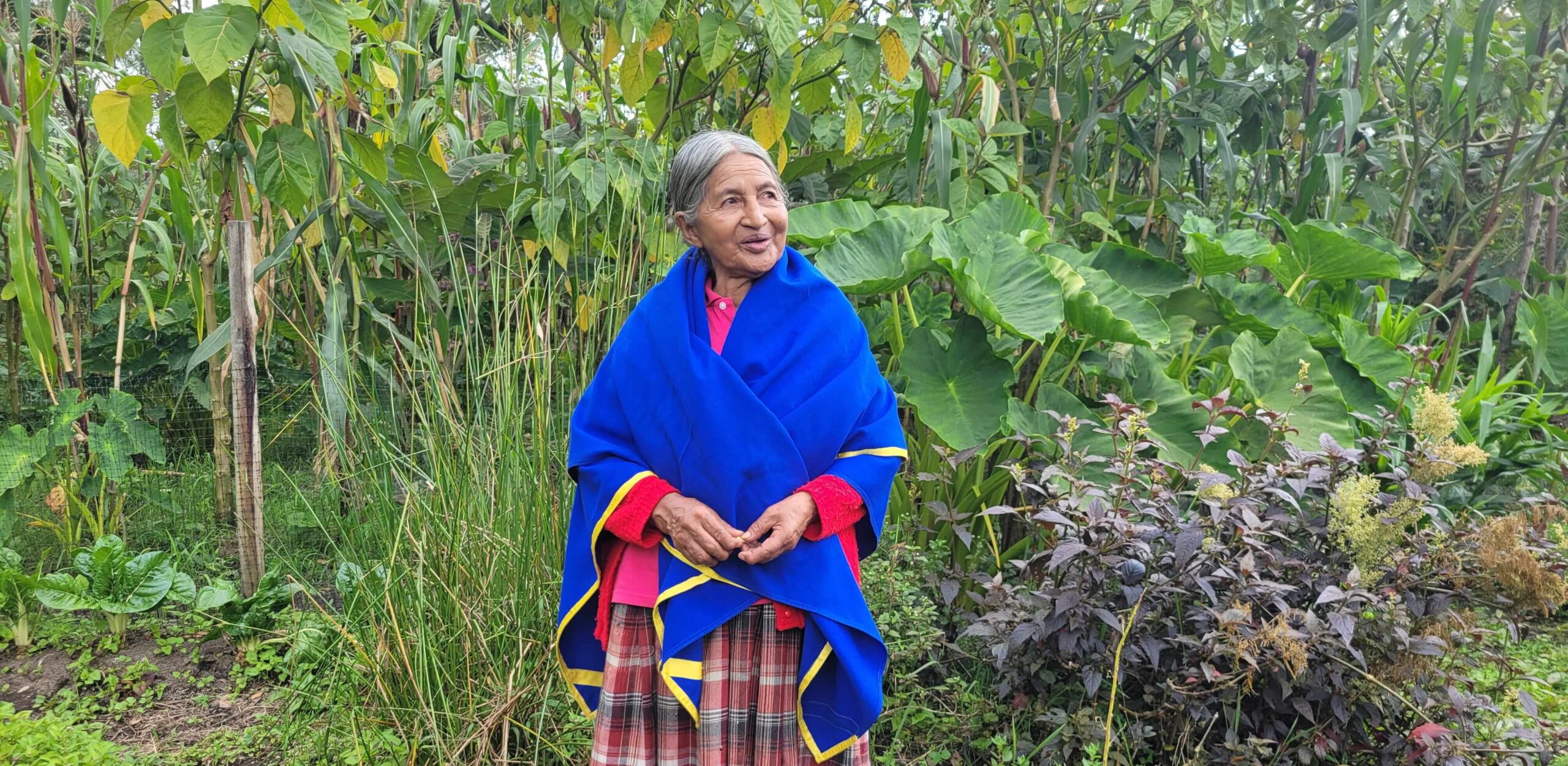
Continuing this issue’s engagement with Indigenous epistemologies and community-based healing, “Oral Testimonies of Traditional Medicine: A Kamëntša Woman’s Legacy”, by Rozalia Agioutanti, MS, explores the intertwined dimensions of Kamëntša ancestral knowledge, women’s roles, and healing practices in the Sibundoy Valley of southwest Colombia. Centering the oral testimony of Mamita Maria Dolores, a Kamëntša elder and healer, the article illuminates how spirituality, plant medicine, storytelling, and communal labor sustain cultural identity amid the enduring impacts of colonization, language loss, and social change.
Through Mamita’s lived experience—rooted in midwifery, uterine care, herbal medicine, and community leadership—the article reveals how knowledge of the body, the land, and the chagra are inseparable from the spiritual and social life of Kamëntša women. Agioutanti documents not only the practical and ceremonial aspects of healing, but also the ways in which these practices transmit memory, resilience, and belonging across generations. By weaving together ethnographic reflection with personal testimony, the article positions Kamëntša women’s wisdom as a living archive of cultural continuity and relational care.
Listen to Rozalia Agioutanti as she reflects on her experience engaging with Mamita Maria Dolores’ stories and the enduring legacy of Kamëntša women’s knowledge:
Oral Testimonies of Traditional Medicine: A Kamëntša Woman’s Legacy
Abstract
This article presents an oral testimony of Mamita Maria Dolores, a Kamëntša elder and healer
from the Sibundoy Valley in southwest Colombia. Through an interview, the author documents the intertwined dimensions of Kamëntša ancestral knowledge, women’s roles, healing practices, and the cultural significance of the chagra. Mamita’s narratives reveal how spirituality, plant medicine, storytelling, and communal labor sustain Kamëntša identity amid the enduring impacts of colonization, language loss, and social change. Her personal history—rooted in midwifery, uterine care, herbal medicine, and community leadership—embodies the resilience and continuity of Indigenous women’s knowledge. The article blends ethnographic reflection with lived testimony, offering a window into a worldview in which healing, land, memory, and womanhood remain profoundly interconnected.
About the author

Rozalia Agioutanti is an environmental engineer, activist, and researcher from Greece whose work centers on climate justice, Indigenous knowledge, and community-led resilience. After leaving her corporate engineering career, she traveled through Colombia documenting environmental challenges, learning from Indigenous communities, and deepening her commitment to nature-based solutions. Rozalia combines technical training with a holistic, intercultural approach to addressing the climate crisis, focusing on the intersection of water, ecology, and Indigenous-led solutions.
Read the article and access the complete Special Edition issue.






Leave a Comment