
Continuing this issue’s engagement with Indigenous epistemologies and community-based healing, The Healing Power of Māori Women’s Ancestral Mark, by Shonelle Wana, Ph.D., examines the relationship between Mana Wahine and embodied cultural practice within te ao Māori. Situating Mana Wahine as a theoretical framework grounded in Māori cosmology, whakapapa, and lived experience, the article outlines how Māori women’s epistemic authority emerges from Indigenous worldviews rather than from adaptations of Western feminist theory. Through this framing, Mana Wahine is positioned as both an analytic lens and a site of cultural continuity shaped by the historical and ongoing impacts of colonization.
Building on this foundation, Wana introduces the Moko Wahine Framework and examines moko kauae—the traditional chin marking worn by Māori women—as an embodied expression of Indigenous epistemology. Through doctoral research, community context, and personal narrative, moko kauae is presented as a practice through which knowledge, identity, leadership, and healing are enacted. By linking theory to lived cultural resurgence, the article contributes to broader conversations on Indigenous epistemic sovereignty and the material dimensions of healing.
Listen to Shonelle Wana as she reflects on her contribution to the journal:
The Healing Power of Māori Women’s Ancestral Mark
Abstract
This paper explores the interaction between feminist and Indigenous epistemologies with a particular focus on Māori women in Aotearoa (New Zealand) and the contributions of Mana Wahine theory (the authority of Māori women). Māori are the Indigenous people of Aotearoa, with connections to land, environment, cultural traditions, and a worldview shaped by whakapapa (genealogy), wairua (spirituality), and collective identity. Colonization disrupted many of these traditions; however, Māori women have continued to hold and transmit Indigenous knowledge through the generations. This paper validates the healing practice of moko kauae (traditional female chin tattoo) as a prime example of Mana Wahine. The paper examines how Western feminist approaches can both align with and diverge from Indigenous ways of knowing. Drawing on Mana Wahine theory and the lived experiences of Māori women, it affirms the centrality of cultural identity in understanding Māori women’s health and healing.
About the author
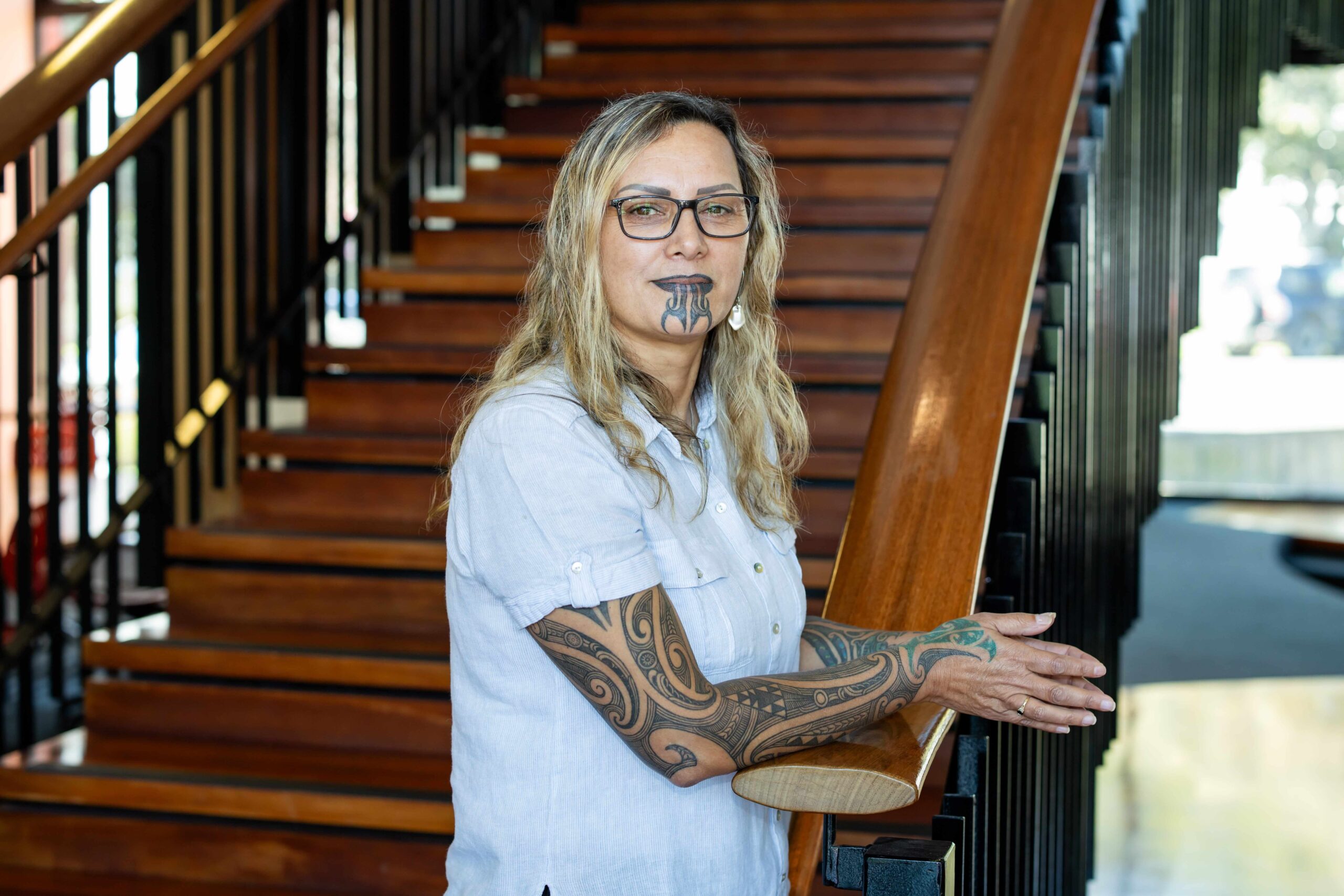
Dr. Shonelle Wana is a Post-Doctoral Research Fellow at Te Whare Wānanga o Awanuiārangi in Aotearoa, New Zealand. She specializes in Māori women’s leadership and Indigenous development. With a Doctorate in Indigenous Development and Advancement, her research centers on advancing Māori women and upholding the traditional values of her people. She is a published scholar, Marsden-funded Associate Investigator and recipient of an HRC Explorer Grant as Primary Investigator for a project designing a Māori model of care for the elderly. Her work is informed by lived experience, academic rigour and deep tribal ties to her homelands. She is dedicated to ensuring that her research creates meaningful outcomes for her people and future generations.
Read the article and access the complete Special Edition issue.






Leave a Comment