

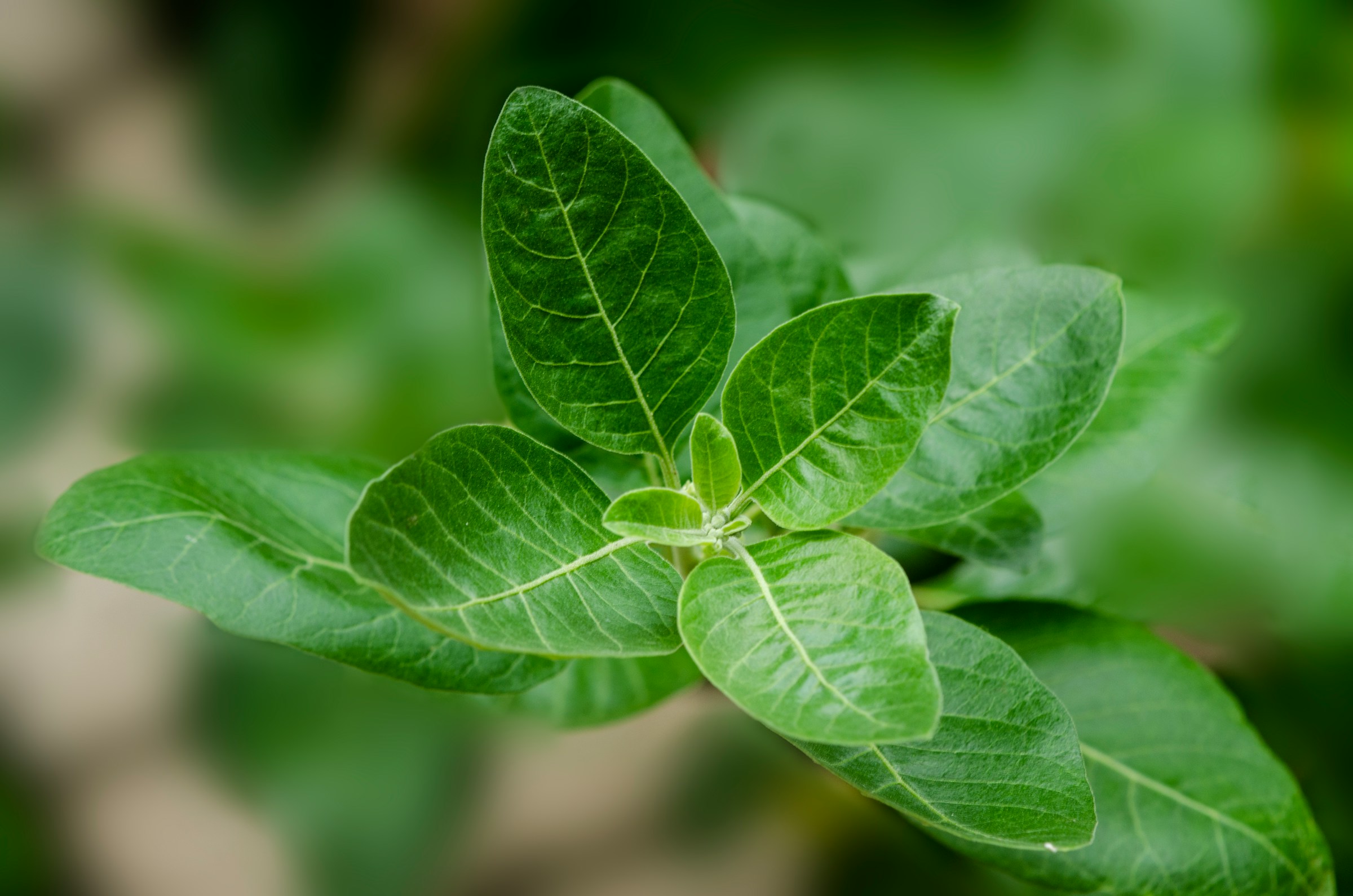
Ashwagandha (Withania somnifera) is native to India and North Africa and has traditionally been used in Ayurvedic medicine to boost vitality and help regulate the body’s response to stress. Its adaptogenic effects and medicinal uses are classified as rasayana, encompassing traditional applications as an aphrodisiac, narcotic, tonic, diuretic, and stimulant. These expansive healing properties have been incorporated into traditional herbal medicine systems for over 4,000 years, providing a substantial historical foundation for holistic healing.
Mikulska, Paulina, Marta Malinowska, Miłosz Ignacyk, et al. “Ashwagandha (Withania Somnifera)—Current Research on the Health-Promoting Activities: A Narrative Review.” Pharmaceutics 15, no. 4 (2023): 1057. https://doi.org/10.3390/pharmaceutics15041057.
Today, Ashwagandha has become a buzzword in the wellness industry and has been popularized for its potential benefits in weight management, cognitive functions such as memory and focus, and physical performance. This plant species, often administered as a root extract or root powder, has attracted significant clinical research, with particularly promising findings for athletes. The following four studies examine evidence on Ashwagandha supplementation in athletic populations.
The first article reviews current scientific evidence on Ashwagandha supplementation, focusing on exercise-induced oxidative stress, athletic performance, safety, and efficacy. Overall, the review suggests that doses of 330–1,000 mg daily may increase endurance and facilitate faster muscle recovery, while 300 mg twice daily during weight training may increase muscular strength and hypertrophy. Across the studies discussed, Ashwagandha was associated with improved fitness measures, including VO₂ max, creatine kinase, cortisol, and testosterone levels, as well as better performance on long jumps, sit-ups, and pull-ups. The evidence also indicates that Ashwagandha may reduce physical fatigue, improve strength, and mitigate oxidative stress, particularly in individuals who regularly engage in strength-based activities.
The second study investigated the effects of Ashwagandha on exercise recovery and muscle strength in female athletes. Participants, 30 female football players aged 18–36 years, were randomly assigned to receive either 600 mg/day of Ashwagandha root extract or a placebo. Muscle recovery was assessed using a Total Quality Recovery score, while strength was evaluated through handgrip strength, medicine ball throw performance, and other physical measurements. After 28 days, the Ashwagandha group showed significant improvements in sleep quality and Total Quality Recovery scores. Overall, this short-term trial suggests that Ashwagandha may support recovery in female athletes, while future research should examine optimal dosage, broader participant demographics, and long-term effects.
The third article explored the effects of Ashwagandha supplementation on neuromuscular performance and recovery during acute competitive periods in male handball players. This randomized, double-blind trial included 31 male athletes who received 600 mg of Ashwagandha root extract daily for eight days. Physical assessments included knee extension and flexion strength, handgrip strength, perceived muscle soreness, fatigue, and Total Quality Recovery scores. Overall, Ashwagandha significantly increased handgrip strength compared with placebo, while having little effect on the other measured outcomes. The authors concluded that short-term supplementation may enhance handgrip strength, suggesting potential neuromuscular benefits for male athletes.
The fourth study examined the effects of 600 mg/day of Ashwagandha root extract on physiological stress biomarkers, perception of recovery, muscle strength, and aerobic capacity in athletes during pre-season training, a period associated with elevated cortisol and accumulated training stress. The study included 56 team-sport athletes who were randomly assigned to treatment groups and followed for 42 days, with equal numbers of men and women in each group. Measurements included salivary biomarkers collected following training sessions, indicators of muscle strength and aerobic capacity, and perceived recovery assessed the following day. Overall, the findings suggest that Ashwagandha may help stabilize stress biomarkers, improve perceived physical recovery, and enhance muscle strength. In women, cortisol increased significantly in the placebo group, while recovery parameters and fatigue perception improved in the Ashwagandha group. In men, cortisone increased significantly in the placebo group, whereas countermovement jump performance improved in the Ashwagandha group.