
Center for Traditional Medicine

CTM Curated Research

Land as a Determinant of Health: Indigenous Research Through Two-Eyed Seeing

Across these studies, health emerges as relational—rooted in connections to land, culture, and community rather than isolated biological factors. Through the Two-Eyed Seeing framework, Indigenous and Western ways of knowing remain distinct while informing a more complete understanding of wellbeing.

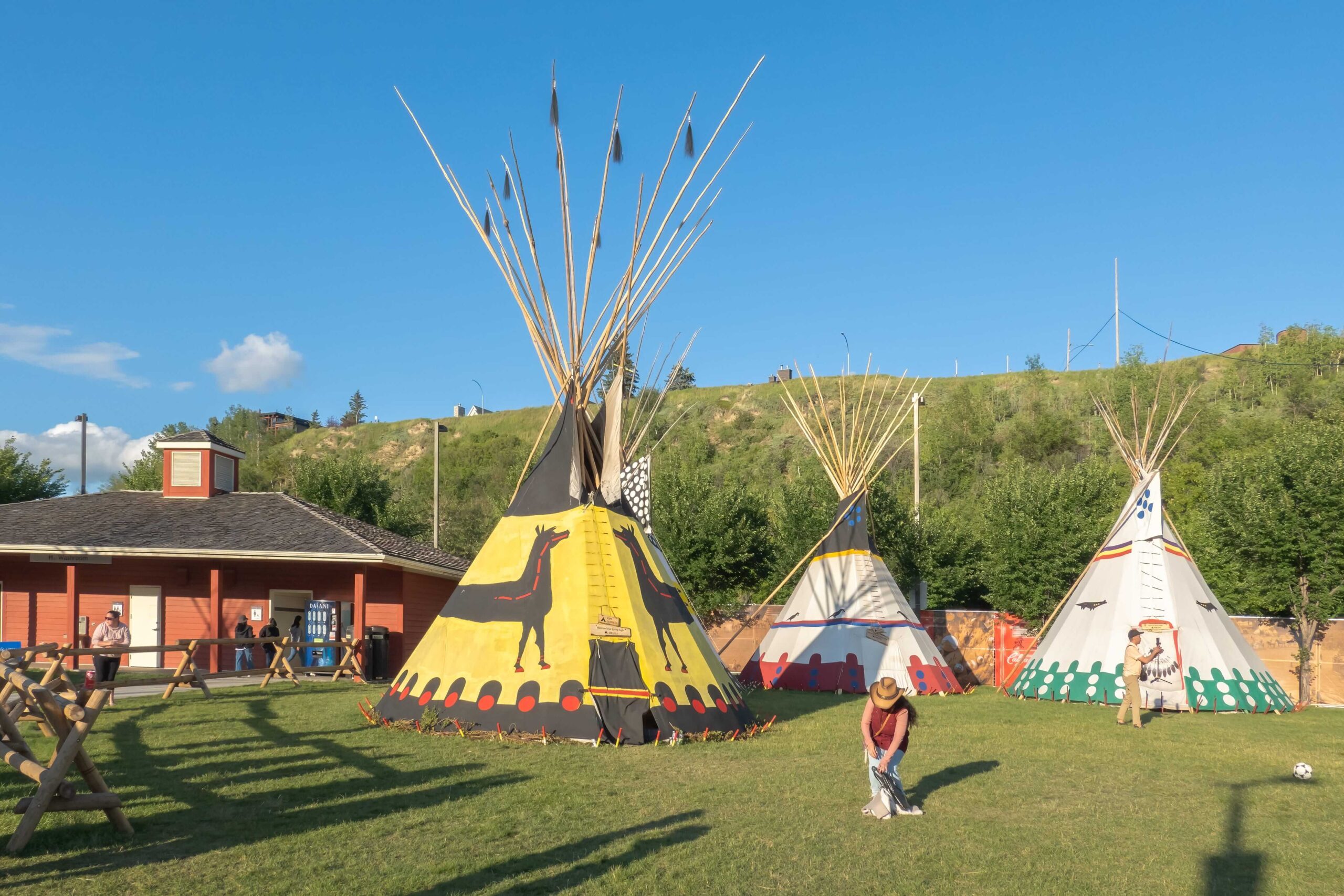
Colorful teepees at Elbow River Camp in Canada, reflecting Indigenous cultural traditions, community, and relationships to land.

The following research presents a vital methodology that integrates land-based pedagogies, Indigenous knowledge systems, and Indigenous youth wellness, with an emphasis on practical application and on decolonizing and simultaneously revitalizing cultural practices. Four complementary studies explore programming in Canada’s Northwest Territories and subarctic regions, discovering that the foundational determinant of Indigenous health is structured around engagement with land, nature, and traditional practices. 

Across these studies, the Two-Eyed Seeing framework offers an epistemological approach in which each “eye” represents a distinct yet equally valid way of knowing: Indigenous knowledge systems and Western scientific paradigms. Rather than seeking synthesis or assimilation, the framework emphasizes a non-hierarchical relationship in which both approaches remain distinct while informing one another.

This approach creates an integrative understanding that is nuanced and contextually relevant. The relational and land-based practices throughout this selection operate interdependently with the individual, relational, and structural levels, reinforcing one another; thus, a more precise evaluation tool would be to refine the classic social determinants of health into relational determinants of health. 

These studies demonstrate how land-based interventions informed by Indigenous epistemological principles transcend biomedical frameworks in health promotion by grounding the approach in relationality (the interconnectedness among all living beings), the preservation of culture, and ongoing efforts to uphold intergenerational transmission of cultural knowledge. 

The first study used a community-based participatory research (CBPR) approach to explore the relationships between urban Indigenous youth in central Canada (Northwest Territories, Saskatchewan, and Manitoba) and nature, and how these relationally grounded connections emerge as a determinant of health over nine years. The framework embraced was integrating Indigenous methodologies with Western research approaches, known as “Two-Eyed Seeing”, employing semi-structured interviews, photovoice methodology (using GoPro cameras to capture meaningful experiences), sharing circles with elders, and focus group discussions. They examined programs that included land-based activities such as traditional fishing, hunting, and trapping; seasonal harvesting; time spent on traditional territories; and ceremonies/teachings from Elders. The art approach included digital storytelling, theatre-based practices, hand drumming and traditional songs, and traditional visual art and beading. They found three significant themes: promoting cultural belonging and positive identity, connecting to community and family, and supporting spiritual health and relationships. The results post-retreat showed statistically significant scores in the areas of leadership and empowerment.

The second study employs a Two-Eyed Seeing framework by integrating Indigenous and conventional epistemologies to explore the human-nature relationship among Indigenous youth. Taking place in Saskatchewan and Manitoba over nine years and across three CBPR projects, the findings emerge with an analysis that positions land as an active determinant within a system of health, based on relationality. Interrelated functions of relational engagement with land emerged: land serves as an ontological anchor and reinforces cultural identity and belonging amid urban displacement. It also facilitates the transmission of intergenerational knowledge and serves as a site for social and relational networks to reproduce, strengthening cohesion and collective identity. Lastly, land-based practices help sustain spiritual health through an integrated model that treats spirituality as foundational rather than ancillary. The study conceptually advances the conventional Social Determinants of Health to a Relational Determinants of Health framework, grounded in relationships with land, community, and cultural practices. Additionally, it challenges deficit-based paradigms by centering youth agency and positioning Indigenous youth as active participants within the production of health through land-based practices.

The third study used a CBPR approach and, like the previous study, was grounded in the decolonizing methodology: the Two-Eyed Seeing framework to challenge the historically dominant conventional scientific paradigms. The Sibi (River) program was a culturally grounded intervention that examined how traditional fishing practices function as a determinant of health for the Omushkego Cree Community of Fort Albany First Nation in the subarctic Ontario, Canada. They found four interconnected themes: the program facilitated intergenerational knowledge transmission and nourished cultural revitalization. They found that being on the Land strengthened place-based identity and belonging. Using the Medicine Wheel framework (an Indigenous concept of health encompassing physical, emotional, mental, and spiritual harmony), they found participants healed across all domains, contrasting with the reductionist biomedical models. And lastly, Land emerged as a Relational Determinant of Health (RDH), again challenging Cartesian dualism (separation of humans and nature), and moves beyond conventional social determinants of health, emphasizing land access as an RDH.

The fourth study examines an emerging health prescription movement that advocates for the formal prescription of “time in nature” (i.e., Canada’s PARx program and Park Rx America) within the context of Indigenous populations, while interrogating the tensions between well-intentioned interventions and Indigenous self-determination. Using qualitative methodologies and a reflexive research approach, the authors acknowledge the lead author as Indigenous and identify the broader research team as representing diverse racial, cultural, gender, and sexual identities. This reflexive framework examines how identity, authority, and assumptions shape both the process and outcomes of research. The findings highlight concerns that nature prescription programs may inadvertently perpetuate colonial medical paternalism if they are not grounded in Indigenous self-determination and community priorities. This can manifest through the use of specific terminology and frameworks, such as “land-based healing,” the support of culturally relevant activities tied to health directives, and an emphasis on priorities that emerge from the collective aspirations of the community.

Tags: Community-Based Participatory Research (CBPR), Cultural Revitalization, Land-based healing, Relational Determinants of Health (RDH), Two-Eyed Seeing (Etuaptmumk)

Research Glossary

Research has its own vocabulary. To help you decipher research, we created a Glossary to ease the way.
You may access it here: Research Glossary

Referenced Research Publications

International journal of circumpolar health
2022, October 6

"Every day I grew stronger and stronger being there".: empowerment through land-and art-based Peer Leader retreats with Indigenous and Northern young people

Abstract

Indigenous adolescents in Canada are among those shouldering the impacts of colonialism and racism. Peer approaches and art-and-land-based programming have demonstrated promise to support empowerment and well-being, yet little is known about their efficacy with Northern and Indigenous adolescents in Canada or of how this group conceptualises empowerment. Fostering Open eXpression among Youth (FOXY) and Strength, Masculinities, and Sexual Health (SMASH) conduct land-and-arts-based Peer Leader Retreats with adolescents from the Northwest Territories, Nunavut and the Yukon Territories. Retreats (2017–2019) included 286 participants (n=196 women [trans-inclusive], n=84 men [trans-inclusive], n=5 non-binary), aged 12–19, the majority of whom (n=235) were Indigenous. Participants completed surveys immediately before and following retreats and 6 months after. Focus group discussions (FGDs) (n=24) were conducted with participants (peer leaders and apprentices) (n=232) following the retreat, and youth staff members (peer facilitators) (aged 14–21, n=7 FGDs). Applying thematic analysis, we explored retreat experiences (FGDs), and Wilcoxon signed-rank tests to examine pre/post retreat changes in leadership, empowerment, and self-confidence (surveys). Quantitatively, there were statistically significant increases in leadership and empowerment in post-retreat scores compared to pre-retreat. Qualitatively, findings demonstrate how Peer Leader Retreats premised on land-and-art-based approaches can support empowerment, confidence, leadership, and social-connectedness.

Reference

Gittings, L., Malama, K., Logie, C. H., Lys, C. L., Taylor, S. B., Mackay, K. I., Kanbari, A., Parker, S., & McNamee, C. (2022). “Every day I grew stronger and stronger being there”.: empowerment through land-and art-based Peer Leader retreats with Indigenous and Northern young people. International journal of circumpolar health, 81(1), 2125489. https://doi.org/10.1080/22423982.2022.2125489

BMC Public Health
2024, September 18

Access to land and nature as health determinants: a qualitative analysis exploring meaningful human-nature relationships among Indigenous youth in central Canada

Abstract

Background

Human relationships with and connections to nature and the “land” are a commonly accepted Social Determinant of Health. Greater knowledge about these relationships can inform public health policies and interventions focused on health equity among Indigenous populations. Two research questions were explored: (1) what are the experiences of meaningful human-nature relationships among Indigenous youth within central Canada; and (2) how do these relationships function as a determinant of health and wellness within their lives.

Methods

Drawing from three community-based participatory research (CBPR) projects within two urban centers in Saskatchewan and Manitoba, the integrated qualitative findings presented here involved 92 interviews with 52 Indigenous youth that occurred over a period of nine years (2014–2023). Informed by “two-eyed seeing,” this analysis combined Indigenous Methodologies and a Constructivist Grounded Theory approach.

Results

Our integrative analysis revealed three cross-cutting themes about meaningful human-nature relationships: (1) promoting cultural belonging and positive identity; (2) connecting to community and family; and (3) supporting spiritual health and relationships. The experiences of young people also emphasized barriers to land and nature access within their local environments.

Discussion

Policies, practices, and interventions aimed at strengthening urban Indigenous young peoples’ relationships to and connections with nature and the land can have a positive impact on their health and wellness. Public Health systems and healthcare providers can learn about leveraging the health benefits of human-nature relationships at individual and community levels, and this is particularly vital for those working to advance health equity among Indigenous populations.

Reference

Hatala, A. R., Morton, D., Deschenes, C., & Bird-Naytowhow, K. (2024). Access to land and nature as health determinants: a qualitative analysis exploring meaningful human-nature relationships among Indigenous youth in central Canada. BMC Public Health, 24(1), 2540. https://doi.org/10.1186/s12889-024-20007-9

International Journal of Circumpolar Health
2023, September 1

Indigenous land-based approaches to well-being: The Sibi (River) program in subarctic Ontario, Canada

Abstract

The Albany River system holds a special significance for the Omushkego Cree of subarctic Ontario, Canada, embodying their cultural roots, history, and the Cree way of life and worldviews. Through the Sibi program, youth learned traditional fishing practices from Elders and on-the-land experts, gaining valuable knowledge on the land and river. The program addressed barriers to being on the land, while also creating a space for the transfer of Indigenous knowledge and revitalising community social networks. The program took place in the summer, following the Omushkego Cree’s seasonal cycle and employed community-based participatory research approach. Photovoice and semi-structured interviews were used to identify elements of well-being from an Indigenous perspective. Regardless of age or experience, participants expressed positive emotions while being on the land, highlighting how strengthening social and community networks, intergenerational knowledge transfer, and fostering cultural continuity contribute to improved well-being. Program outcomes emphasize the importance of collaboration with communities to gain insights into their needs, priorities, and values, ultimately creating more sustainable and effective well-being programs. By fostering engagement and recognizing the environment’s significance, sustainable and long-term solutions can be pursued to address challenges faced by communities, ultimately advancing health and well-being for both present and future generations.

Reference

Ahmed, F., Liberda, E. N., Solomon, A., Davey, R., Sutherland, B., & Tsuji, L. J. S. (2023). Indigenous land-based approaches to well-being: The Sibi(River) program in subarctic Ontario, Canada. International journal of circumpolar health, 82(1), 2252595. https://doi.org/10.1080/22423982.2023.2252595

International Journal of Environmental Research and Public Health
2024, June 20

Nature Prescriptions and Indigenous Peoples: A Qualitative Inquiry in the Northwest Territories, Canada

Abstract

Nature prescription programs have become more common within healthcare settings. Despite the health benefits of being in nature, nature prescriptions within the context of Indigenous Peoples have received little attention. We therefore sought to answer the following question: What are circumpolar-based physicians’ and Indigenous Elders’ views on nature prescribing in the Northwest Territories, Canada? We carried out thirteen semi-structured interviews with physicians between May 2022 and March 2023, and one sharing circle with Indigenous Elders in February 2023. Separate reflexive thematic analysis was carried out to generate key themes through inductive coding of the data. The main themes identified from the physician interviews included the importance of cultural context; barriers with nature prescriptions in the region; and the potential for nature prescriptions in the North. Reflections shared by the Elders included the need for things to be done in the right way; the sentiment that the Land is not just an experience but a way of life; and the importance of traditional food as a connection with Nature. With expanding nature prescription programs, key considerations are needed when serving Indigenous communities. Further investigation is warranted to ensure that nature prescriptions are appropriate within a given context, are inclusive of supporting Land-based approaches to health and wellbeing, and are considered within the context of Indigenous self-determination.

Reference

Redvers, N., Hartmann-Boyce, J., & Tonkin-Crine, S. (2024). Nature Prescriptions and Indigenous Peoples: A Qualitative Inquiry in the Northwest Territories, Canada. International journal of environmental research and public health, 21(6), 806. https://doi.org/10.3390/ijerph21060806