

Center for Traditional Medicine

CTM Curated Research

Climate Change and Indigenous Peoples’ Mental Health

The following studies present a synthesis that addresses two primary arguments: first, climate change should be understood as the latest iteration of ongoing settler-colonial violence, and not an isolated environmental crisis; and second, Indigenous knowledge systems are not alternative frameworks, but indispensable and foundational to reimagining the future of people and the planet. The studies converge on critical findings, including land dispossession, deforestation, and legislative barriers to traditional practices, which are linked with increased rates of suicide, substance use, and psychological stress. Epistemological violence arises through the translation of Indigenous views (language) into Western constructs (ie, mental health, climate change). Combined, these findings demonstrate how ongoing settler-colonial systems shape mental health outcomes, and they also offer insights for Indigenous knowledge systems to present perspectives and solutions for healing and caring for the land in ways that diverge from the individual-centered, extractive approaches of dominant biomedical and institutional frameworks.

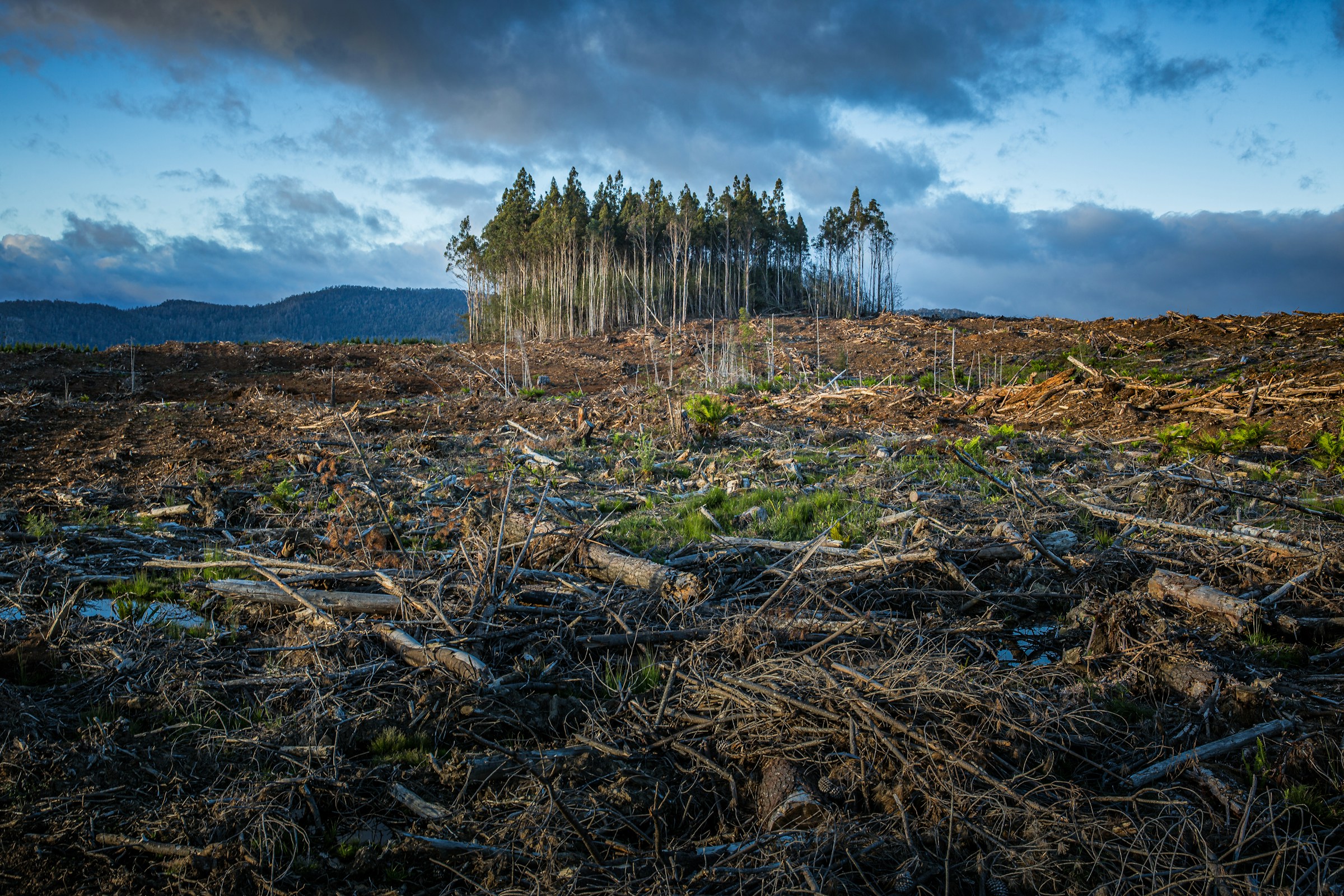
Mass deforestation across field.
Mass deforestation across field. Photo by Matt Palmer on Unsplash.

The first study is a qualitative assessment of the impacts of climate change, conducted with 22 Indigenous stakeholders and public health service managers in Brazil. Examining themes, they found six subcategories further organized into three overarching themes: environmental degradation and climate change, vulnerability and mental health impacts, and public health policy needs. Their findings indicate that deforestation and land loss are causally linked to factors influencing mental health outcomes. The correlated impacts include increased suicide rates and substance use within Indigenous communities. 

Discoveries highlighted the necessity of Indigenous governance and inclusion in decision-making processes, along with strong advocacy for public health policies that recognize the relational interconnectedness of land, culture, and health as inseparable domains.

In the second study, researchers employed a community-based participatory research approach to explore climate change-related mental health among various Indigenous peoples, including the Ogiek (Kenya) , Batwa (Uganda), Iruliga (India), Pgak’yau (Thailand), and Sámi (Sápmi). This research spanned three years and culminated in a perspective paper/methodological reflection that articulates findings through the lens of “soltalguia”, a term that represents a unique type of grief linked to environmental degradation (of one’s home environment). This shift is characterized by a profound sense of distress akin to homesickness, despite the individual still residing in their “home”, albeit fundamentally altered. Methodological challenges included the translation of terms such as “climate change” and “mental health”, which do not have a cultural equivalent, and carry the risk of stigma. Another barrier includes legislative restrictions on Indigenous peoples that prevents engagement in cultural practices that are foundational to wellness. The paper emphasizes that research must recognize Indigenous cultural rights and self-determination to be meaningful.

The third study adopted a participatory mixed-methods design involving 20 Indigenous university participants in Brazil, utilizing concept mapping. The goal was to identify actionable priorities to improve Indigenous mental health during climate change.  The participants identified 42 statements, which were iteratively refined and condensed into six clusters: family support, respect and understanding, improvement actions, public policies, health actions, and Indigenous training.  Findings indicate that Indigenous Eco-Relational Engagement (IERE), including traditional activities, spiritual practices, and language, is associated with improved mental health metrics. Results emphasize the importance of capacity building and the genuine Indigenous involvement in health service planning.

The fourth study used a quantitative method to examine the relationship between positive mental health and Indigenous Eco-Relational Engagement (IERE) among Anishnaabeg adults across the United States and Canada. The IERE comprises three dimensions: nature-based traditional activities (e.g., hunting, ricing, collecting herbs/medicine), spiritual practices (tobacco offerings, sweatlodge), and language use (from basic to fluent Anishinaabemowin proficiency). The study used linear regression analysis to test relationships between variables and found a significant positive relationship between IERE and mental well-being, even after adjusting for socioeconomic variables, suggesting a protective relational effect embedded within land-based and cultural practices.

Tags: climate change, community-based participatory research, concept mapping, decolonial health research, ecological determinants, environmental degradation, Indigenous Eco-Relational Engagement (IERE), Indigenous governance, Indigenous mental health, land-based health, public health policy, relational health, solastalgia, Traditional Ecological Knowledge

Research Glossary

Research has its own vocabulary. To help you decipher research, we created a Glossary to ease the way.
You may access it here: Research Glossary

Referenced Research Publications

BMJ Open
2024, September 24

Environmental degradation, climate change and health from the perspective of Brazilian Indigenous stakeholders: a qualitative study

Abstract

Background

The WHO identifies climate change as the most significant threat to global health systems. Indigenous peoples, whose lives are deeply intertwined with nature, are particularly vulnerable to the impacts of these changes.

Objective

This study aimed to understand the perspectives of Indigenous stakeholders and public services managers on the interconnectedness of climate change and Indigenous health.

Design

A qualitative study with 22 Indigenous stakeholders and public service managers on climate change and perceived impact on Indigenous health.

Setting and participants

Indigenous stakeholders and public service managers on climate change and perceived impact on Indigenous health from Brazil. Data was collected through interviews incorporating two vignette videos depicting environmental and health scenarios. Thematic content analysis was used to analyse the data.

Results

The analytical process yielded six subcategories that were further grouped into three overarching thematic macro-categories: environmental degradation and climate change in the context of Indigenous peoples; environment, vulnerability and impact on Indigenous mental health; and actions and public health policies for Indigenous peoples.

Conclusion

The perspectives of Indigenous stakeholders and public service managers on the interconnectedness of climate change and Indigenous health were deeply entrenched in their lived experiences of loss of their lands from deforestation and environmental degradation. They argued strongly for the strengthening of public health policies aimed at the Indigenous peoples, to face many challenges, especially suicide, and to have a voice in decision-making. A sensitive approach that values Indigenous peoples’ connections with nature is fundamental to promote their health and well-being.

Reference

Grande, A. J., Dias, I. M. A. V., Jardim, P. T. C., Aparecida Vieira Machado, A., Soratto, J., da Rosa, M. I., Ceretta, L. B., Zourntos, X., Suares, R. O., & Harding, S. (2024). Environmental degradation, climate change and health from the perspective of Brazilian Indigenous stakeholders: a qualitative study. BMJ open, 14(9), e083624. https://doi.org/10.1136/bmjopen-2023-083624

BMJ mental health
2025, July 25

Indigenous mental health research in the context of climate change: methodological reflections on language and barriers to cultural practice.

Abstract

Climate change creates unique forms of psychological distress for Indigenous Peoples whose identities and cultural practices are often intrinsically connected to ancestral lands, yet research on culturally appropriate methodologies for studying Indigenous mental health in the context of climate change remains limited. This perspective paper presents methodological reflections from Land Body Ecologies research collective, which collaborates with Ogiek (Kenya), Batwa (Uganda), Iruliga (India), Pgak’yau (Thailand) and Sámi (Sápmi) Indigenous Peoples to explore climate change-related mental health impacts through the lens of solastalgia. Through participatory dialogues conducted during in-person gatherings, team members reflected on three years of community-based participatory research and identified two critical methodological challenges underexplored in the existing literature: (1) language and concept translation difficulties, where terms such as ‘mental health’ and ‘climate change’ lack direct cultural equivalents and may carry stigmatising connotations and (2) barriers to cultural practices, where climate change and conservation-related legislation restricts Indigenous Peoples’ access to ancestral lands and traditional practices essential for well-being. These challenges reflect deeper epistemological tensions between conventional research approaches and Indigenous holistic worldviews that understand land, body and ecosystems as interconnected. It concludes that meaningful mental health research with Indigenous Peoples demands active recognition of Indigenous cultural rights and self-determination, collaborative approaches that honour Indigenous knowledge systems and systemic changes that normalise Indigenous timelines, relationality and knowledge sovereignty within research institutions.

Reference

 Gougsa, S., Pratt, V., Kobei, D., Kokunda, S., Odochao, S., Laiti, J., George, B., Sim, J., & Redvers, N. (2025). Indigenous mental health research in the context of climate change: methodological reflections on language and barriers to cultural practice. BMJ mental health, 28(1), e301856. https://doi.org/10.1136/bmjment-2025-301856

Frontiers in Psychiatry
2023, November 5

Climate change and mental health of Indigenous peoples living in their territory: a concept mapping study.

Abstract

Background

The alarming increase in annual deforestation rates has had devastating consequences in climate change, and it is affecting Indigenous people, who depend entirely on the land for survival and has also weakened the rainforest’s crucial role in stabilizing the global climate. Recognizing and respecting Indigenous people’s needs and social, economic, and historical conditions influence health and healthcare. This study aimed to conduct online concept mapping workshops with university students to identify perceived important and feasible actions for improving the mental health of Indigenous people living in their territory in association with climate change.

Methods

Concept mapping, a participatory mixed methodology, was conducted virtually with 20 Indigenous students at two universities in Brazil. A focus prompt was developed from consultations with Indigenous stakeholders and read—“To improve the mental health of Indigenous peoples in their territory during climate change crises, it is necessary to….”

Results

University students organized 42 unique statements in 6 clusters that cover a wide range of topics: family support, 0.68 (SD 0.19); respect and understanding, 0.37 (SD 0.08); improvement actions, 0.52 (SD 0.07); public policies in favor of Indigenous people’s mental health, 0.24 (0.09); health actions, 0.15 (SD 0.08); Indigenous training in health and its importance in improving mental health 0.32 (SD 0.07).

Conclusion

These clusters range from community initiatives, public policies, health actions, and strengthening professional services in Indigenous communities. These all provide numerous concrete ideas for developing interventions designed to address mental health challenges associated with climate change.

Reference

Grande, A. J., Dias, I. M. A. V., Jardim, P. T. C., Vieira Machado, A. A., Soratto, J., da Rosa, M. I., Roever, L., Bisognin Ceretta, L., Zourntos, X., & Harding, S. (2023). Climate change and mental health of Indigenous peoples living in their territory: a concept mapping study. Frontiers in psychiatry, 14, 1237740. https://doi.org/10.3389/fpsyt.2023.1237740

Journal of indigenous social development
2025, April 1

Indigenous Eco-Relational Engagement and mental wellbeing among American Indian and First Nation adults: Applying the Indigenous Traditional Ecological Knowledge framework.

Abstract

Addressing Indigenous determinants of health includes understanding the interconnectedness among Indigenous health and wellbeing, relationship to place and Mother Earth. Though persistent challenges exert a disproportionate burden on Indigenous communities, many experiencing an intersecting risk profile that includes a history of settler-colonial subjugation and historical loss, while navigating loss and damage due to climate change which further impinges on their mental health. Critically, Traditional, spiritual, and cultural activities operate as functional observations of Indigenous Traditional Ecological Knowledges (ITEKs) and are increasingly recognized as necessary components of adaptation and mitigation to climate change and sustainability of otherwise delicate ecosystems. In addition, corresponding traditional and cultural activities have been associated with improved mental health. The present investigation utilizes land-based cultural and traditional activities, as well as indicators of language revitalization in a composite variable – Indigenous Eco-Relational Engagement (IERE) to determine the relationship to positive mental health among Anishinaabeg in the U.S. and Canada. The results suggest that IERE shares a positive relationship with positive mental health among Anishinaabeg adults.  Results of the present investigation help us to reconcile the relationship between Indigenous and planetary health, such that both may be supplemented through the active observation of ITEKs vis-à-vis engagement in traditional cultural, spiritual activities and language revitalization efforts.

Reference

Hill, K., Russette, H., Steinberg, R., & Fernandez, A. (2025). Indigenous Eco-Relational Engagement and mental wellbeing among American Indian and First Nation adults: Applying the Indigenous Traditional Ecological Knowledge framework. Journal of indigenous social development, 13(1), 40–65. https://doi.org/10.55016/ojs/jisd.v13i1.79223