

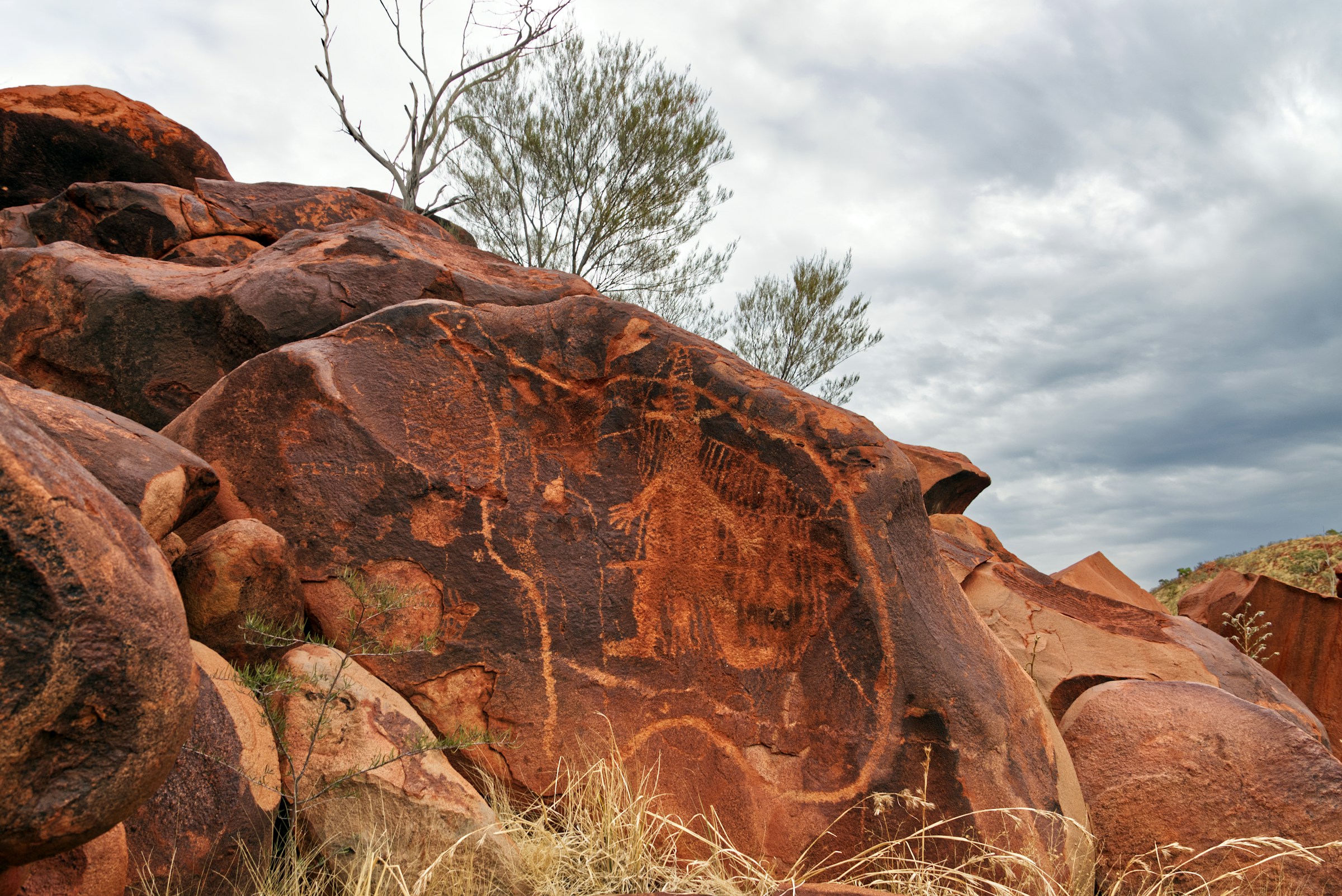
Aboriginal and Torres Strait Islander peoples maintain some of the world’s oldest living collections of independent knowledge and culture on the Australian continent and surrounding islands. These communities developed alongside native flora and fauna approximately 60,000 years ago, and they have carried extensive traditions and oral histories regarding bush medicine.
Yeshi, Karma, Gerry Turpin, Tenzin Jamtsho, and Phurpa Wangchuk. “Indigenous Uses, Phytochemical Analysis, and Anti-Inflammatory Properties of Australian Tropical Medicinal Plants.” Molecules 27, no. 12 (2022): 3849. https://doi.org/10.3390/molecules27123849.
Aboriginal healers, also known as traditional healers or “Ngangkari” among the Ngaanyatjarra, Pitjantjatjara, and Yankunytjatjara peoples of remote western Central Australia, utilize native plants for spiritual, physical, and community-based healing. Traditional healing knowledge is passed down through apprenticeship systems, guiding the use of medicinal plants for dietary supplementation and the treatment of ailments. Herbal medicine has enabled Aboriginal peoples to live harmoniously with their ancestral lands and thrive in the hostile climate of remote Australia.
Many native Australian plant species have recently been recognized for their unique phytochemical properties, given Australia’s isolated ecosystem and diverse abundance of endemic flora. These species are found throughout the Australian bush, the undeveloped natural landscape that includes eucalypt forests, woodlands, and scrublands. Clinical researchers have begun to investigate both Australian bush foods and native trees for their potential applications in treating and managing inflammation, wound healing, and muscle recovery. The following four studies review Australian bush medicine species identified by researchers as potentially effective, clinically supported healing interventions.
The first article examines the phytochemical properties of five medicinal plants used by the Mbabaram Aboriginal community to treat wounds and inflammation-related diseases. These plants include Breynia oblongifolia, Cajanus reticulatus, Dodonaea lanceolata, Exocarpos latifolius, and Coleus amoenus, whose antioxidant and anti-inflammatory activities were evaluated using various laboratory assays. They are traditionally used to treat inflammatory conditions such as wounds, sores, and ulcers. Findings suggest that these medicinal plants exhibit significant anti-inflammatory and antioxidant activity, supporting their traditional medicinal applications. In particular, E. latifolius stem extract demonstrated the greatest antioxidant activity, while B. oblongifolia leaf extract showed the highest anti-inflammatory activity. These results indicate that these plants may serve as promising treatment options for inflammation-related conditions.
The second study identified 45 medicinal plants used by Aboriginal peoples in Australia to treat inflammatory conditions. Among these plants, 83 compounds demonstrated anti-inflammatory properties. Most medicinal plants have been investigated in countries such as China, India, Japan, and Thailand, whereas Australia has reported only 5 anti-inflammatory species used in traditional herbal medicine. These species include Alphitonia petriei, Angophora costata, Corymbia terminalis, Dodonaea polyandra, and Excoecaria agallocha. For example, D. polyandra was found to contain a novel anti-inflammatory benzoyl ester clerodane diterpenoid, which is being explored for the treatment of skin diseases. Given the promising anti-inflammatory properties of these species, the authors call for further research on Australian medicinal plants. They argue that such research should be conducted in collaboration with Indigenous practitioners to better inform scientific understanding of traditional uses and practices.
The third article provides an overview of the phytochemical and bioactive composition of Australian native plants and explores their potential role in muscle recovery and the management of inflammation. The authors highlight that many Australian fruits and herbs contain exceptionally high levels of polyphenols, flavonoids, anthocyanins, and vitamin C, all of which possess antioxidant and anti-inflammatory properties. The article identifies several notable species, including Kakadu plum, Davidson plum, finger lime, lemon myrtle, and Tasmanian pepperberry. These native plants may help reduce exercise-induced muscle damage due to their elevated concentrations of bioactive phytochemicals. The authors propose that these findings, in conjunction with cell culture and animal studies, suggest that these plants may support exercise recovery by reducing oxidative stress, limiting excessive inflammation, enhancing antioxidant defenses, and potentially shortening recovery time. Although the bioactive properties and traditional uses indicate promising therapeutic potential for these native plants, the authors conclude that further research is needed to determine their clinical efficacy.
The fourth study examines clinical research investigating the chemical, pharmacological, and toxicological properties of Australian Indigenous plant species. This review highlights the therapeutic potential of plants such as Kakadu plum, Davidson plum, Tasmanian pepper leaf, and lemon myrtle. Evidence suggests that these species exhibit antimicrobial, antioxidant, anti-inflammatory, anticancer, neuroprotective, and antidiabetic properties. These conclusions are based on their high concentrations of bioactive compounds, which confer exceptionally strong antioxidant capacity. Existing research suggests that this activity may help reduce oxidative stress, improve glucose metabolism, and support the management of metabolic diseases. However, the authors acknowledge the lack of substantial clinical research, as most investigations have been limited to animal and laboratory studies. The study calls for rigorous human clinical trials to evaluate the safety and efficacy of these species, given their long-standing use in traditional Australian healing practices. The integration of Indigenous knowledge into future research is imperative for connecting traditional medicinal applications with modern pharmacological investigations and promoting culturally appropriate ethnopharmacological research.