

Center for Traditional Medicine

CTM Curated Research

Ashwagandha for Athletes: The Effects of Ashwagandha Supplementation on Athletic Performance and Muscle Recovery

Ashwagandha, an herb traditionally used in Ayurvedic healing, has been widely adopted and integrated into public consumption and Western medical research. In athletes, ashwagandha supplementation may support muscle recovery, reduce oxidative stress, and improve strength- and endurance-related fitness measures.

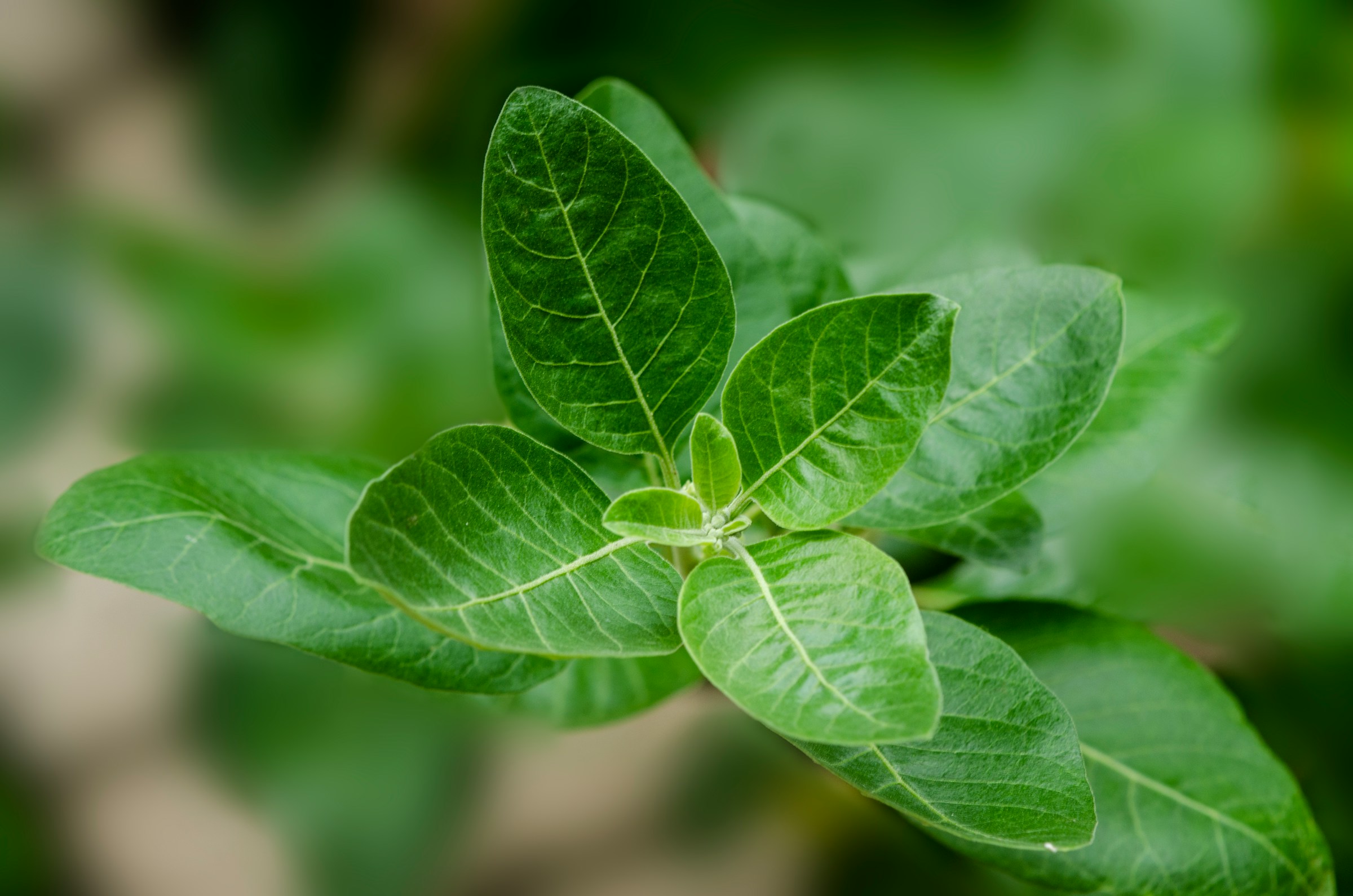
Leaves of an Ashwagandha plant.
Leaves of an Ashwagandha plant. Photo by Bankim Desai on Unsplash.

Ashwagandha (Withania somnifera) is native to India and North Africa and has traditionally been used in Ayurvedic medicine to boost vitality and help regulate the body’s response to stress. Its adaptogenic effects and medicinal uses are classified as rasayana, encompassing traditional applications as an aphrodisiac, narcotic, tonic, diuretic, and stimulant. These expansive healing properties have been incorporated into traditional herbal medicine systems for over 4,000 years, providing a substantial historical foundation for holistic healing.

Mikulska, Paulina, Marta Malinowska, Miłosz Ignacyk, et al. “Ashwagandha (Withania Somnifera)—Current Research on the Health-Promoting Activities: A Narrative Review.” Pharmaceutics 15, no. 4 (2023): 1057. https://doi.org/10.3390/pharmaceutics15041057.

Today, Ashwagandha has become a buzzword in the wellness industry and has been popularized for its potential benefits in weight management, cognitive functions such as memory and focus, and physical performance. This plant species, often administered as a root extract or root powder, has attracted significant clinical research, with particularly promising findings for athletes. The following four studies examine evidence on Ashwagandha supplementation in athletic populations.

The first article reviews current scientific evidence on Ashwagandha supplementation, focusing on exercise-induced oxidative stress, athletic performance, safety, and efficacy. Overall, the review suggests that doses of 330–1,000 mg daily may increase endurance and facilitate faster muscle recovery, while 300 mg twice daily during weight training may increase muscular strength and hypertrophy. Across the studies discussed, Ashwagandha was associated with improved fitness measures, including VO₂ max, creatine kinase, cortisol, and testosterone levels, as well as better performance on long jumps, sit-ups, and pull-ups. The evidence also indicates that Ashwagandha may reduce physical fatigue, improve strength, and mitigate oxidative stress, particularly in individuals who regularly engage in strength-based activities.

The second study investigated the effects of Ashwagandha on exercise recovery and muscle strength in female athletes. Participants, 30 female football players aged 18–36 years, were randomly assigned to receive either 600 mg/day of Ashwagandha root extract or a placebo. Muscle recovery was assessed using a Total Quality Recovery score, while strength was evaluated through handgrip strength, medicine ball throw performance, and other physical measurements. After 28 days, the Ashwagandha group showed significant improvements in sleep quality and Total Quality Recovery scores. Overall, this short-term trial suggests that Ashwagandha may support recovery in female athletes, while future research should examine optimal dosage, broader participant demographics, and long-term effects.

The third article explored the effects of Ashwagandha supplementation on neuromuscular performance and recovery during acute competitive periods in male handball players. This randomized, double-blind trial included 31 male athletes who received 600 mg of Ashwagandha root extract daily for eight days. Physical assessments included knee extension and flexion strength, handgrip strength, perceived muscle soreness, fatigue, and Total Quality Recovery scores. Overall, Ashwagandha significantly increased handgrip strength compared with placebo, while having little effect on the other measured outcomes. The authors concluded that short-term supplementation may enhance handgrip strength, suggesting potential neuromuscular benefits for male athletes.

The fourth study examined the effects of 600 mg/day of Ashwagandha root extract on physiological stress biomarkers, perception of recovery, muscle strength, and aerobic capacity in athletes during pre-season training, a period associated with elevated cortisol and accumulated training stress. The study included 56 team-sport athletes who were randomly assigned to treatment groups and followed for 42 days, with equal numbers of men and women in each group. Measurements included salivary biomarkers collected following training sessions, indicators of muscle strength and aerobic capacity, and perceived recovery assessed the following day. Overall, the findings suggest that Ashwagandha may help stabilize stress biomarkers, improve perceived physical recovery, and enhance muscle strength. In women, cortisol increased significantly in the placebo group, while recovery parameters and fatigue perception improved in the Ashwagandha group. In men, cortisone increased significantly in the placebo group, whereas countermovement jump performance improved in the Ashwagandha group.

Tags: adaptogen, ashwagandha, athletic biomarkers, athletic health, Ayurveda, community healing, Herbal medicine, herbal supplementation, Indigenous knowledge, muscular recovery, respiratory health, testosterone, traditional healing, traditional medicine

Research Glossary

Research has its own vocabulary. To help you decipher research, we created a Glossary to ease the way.
You may access it here: Research Glossary

Referenced Research Publications

Nutrition and Health
2026, May 2

Effects of Ashwagandha Supplementation on Athletic Performance and Recovery: A Narrative Review

Abstract

Background

Ashwagandha, a plant belonging to the Solanaceae family, has gained increasing attention in recent years due to its antioxidant, anti-inflammatory, and adaptogenic properties, and its potential to improve physical performance and support post-exercise recovery.

Objectives

This narrative review aims to summarize and critically evaluate the current scientific evidence regarding the effects of Ashwagandha supplementation on exercise-induced oxidative stress, athletic performance, and safety.

Methodology

This study is a narrative review based on previously published literature. The synthesis involved evaluating current studies focusing primarily on Ashwagandha supplementation and its relationship to exercise and sports performance. The included sources comprise clinical trials, meta-analyses, and review articles reporting outcomes related to strength, endurance, recovery, and safety.

Results

Studies suggest that Ashwagandha dosages of 330–1000 mg daily will increase endurance and facilitate quicker recoveries, with a twice daily dose of 300 mg in combination with weight training increasing muscular strength and hypertrophy. Ashwagandha is also believed to regulate cortisol levels and relieve anxiety and insomnia. Typical dosage levels in the sporting field appear to be higher, at approximately 600 mg/day, but a lower dose will be required by less active people. Side effects are mild in the majority of the literature and no dangerous side effects occur at recommended dosages.

Conclusion

Ashwagandha has been found to be safe and effective in a natural supplementary capacity in sports and athletics. The correct dosage and application period of Ashwagandha should be taken into consideration to reap its properties in the human body.

Reference

AKbulut, Büşra, and Eren Canbolat. “Effects of Ashwagandha Supplementation on Athletic Performance and Recovery: A Narrative Review.” Nutrition and Health, May 2, 2026, 02601060261447118. https://doi.org/10.1177/02601060261447118.

European Journal of Sport Science
2025, February 15

Effects of Root Extract of Ashwagandha ( Withania Somnifera ) on Perception of Recovery and Muscle Strength in Female Athletes

Abstract

Ashwagandha is a supplement with the potential to improve exercise performance. However, research on its impact on female athletes remains limited. This study investigates the effects of ashwagandha on exercise recovery and muscle strength in professional female athletes, addressing a gap in understanding its role in this underrepresented population. Female footballers were randomly assigned to a 600 mg/day ashwagandha root extract group (ASH, n = 15; age: 26.0 ± 4.9 years, height: 1.66 ± 0.1 m, body mass: 61.5 ± 7.5 kg, and career: 15.2 ± 7.4 years) or a placebo group (PLA, n = 15; age: 23.5 ± 5.5 years, height: 1.66 ± 0.1 m, body mass: 61.5 ± 6.0 kg, and career: 13.1 ± 4.9 years). Recovery was assessed with total quality recovery (TQR), Hooper Index (HI) and rate of perceived exertion (RPE). Strength was assessed by hand grip, medicine ball throw (MBT), countermovement jump (CMJ) and peak power. Dietary intake was recorded prior to baseline measurements. Repeated measures ANOVA, Bonferroni test, independent t-tests and ANCOVA were used in the analysis. A significant group × time interaction effect was found for TQR (p = 0.026), with the post-hoc analysis revealing a significant difference between ASH and PLA at 28 days (p = 0.039). Perceived sleep quality from HI improved significantly in ASH compared to PLA (p = 0.038), with a significant change at 14 days. The ANCOVA analysis highlighted the significant influence of carbohydrate intake on hand grip strength (p = 0.005), MBT (p < 0.001) and body mass (p < 0.001). A dosage of 600 mg of ashwagandha root extract for 28 days may improve TQR and enhance perceived sleep quality in female footballers. Future research should investigate the optimal dosage and test across a broader range of athletic populations.

Reference

Coope, Olivia C., Andrea Reales Salguero, Tilly Spurr, et al. “Effects of Root Extract of Ashwagandha ( Withania Somnifera ) on Perception of Recovery and Muscle Strength in Female Athletes.” European Journal of Sport Science 25, no. 3 (2025): e12265. https://doi.org/10.1002/ejsc.12265.

Nutrition and Health
2026, April 6

Effects of 8 Days of Ashwagandha Supplementation on Strength, Fatigue, Soreness, and Recovery in Amateur Handball Players: A Double-Blind, Randomized, Placebo-Controlled Trial

Abstract

Background

Nutritional supplements are commonly used to increase strength, recovery, and overall athletic performance. Ashwagandha (Withania somnifera), a natural adaptogen, has shown promising ergogenic potential; however, evidence in athletes—particularly over short-term periods remains limited.

Methods

This randomized, double-blind, placebo-controlled trial investigated the effects of 8 days of Ashwagandha supplementation (600 mg of standardized root extract daily) – a duration chosen to evaluate its potential utility during acute competitive periods – on neuromuscular performance and recovery in 31 male handball players (age: 20.3 ± 3.1 years). Participants ingested either Ashwagandha (600 mg/day) or placebo capsules. Assessments included knee extension and flexion strength, handgrip strength, perceived muscle soreness, fatigue, and total quality recovery (TQR), measured at baseline, day 4, and day 8.

Results

Ashwagandha significantly improved handgrip strength compared with placebo after 8 days (d = 0.33; p = 0.011), whereas no consistent effects were found for knee flexion or extension. Perceived soreness, fatigue, and recovery did not differ meaningfully between groups.

Conclusions

Short-term Ashwagandha supplementation may enhance handgrip strength, suggesting a potential neuromuscular benefit in athletes. However, the lack of consistent effects on lower-limb strength and subjective recovery highlights the need for longer-term studies to confirm these findings.

Reference

Ferreira, João Francisco, Filipe Maia, Ricardo Maia Ferreira, et al. “Effects of 8 Days of Ashwagandha Supplementation on Strength, Fatigue, Soreness, and Recovery in Amateur Handball Players: A Double-Blind, Randomized, Placebo-Controlled Trial.” Nutrition and Health, April 6, 2026, 02601060261439102. https://doi.org/10.1177/02601060261439102.

Nutrients
2026, January 12

Ashwagandha Root Extract Stabilises Physiological Stress Responses in Male and Female Team Sports Athletes During Pre-Season Training

Abstract

Objectives

This study investigates the effects of 600 mg/day Ashwagandha root extract on physiological stress biomarkers, perception of recovery, muscle strength and aerobic capacity in team sports athletes during pre-season training, a period associated with elevated cortisol and accumulated training stress.

Methods

Fifty-six athletes (26.8 ± 4.4 years, 1.74 ± 0.10 m, 79.4 ± 17.3 kg, 11.0 ± 7.1 career years) across rugby, water polo and football were randomly assigned to an Ashwagandha (ASH; n = 28, 14 males and 14 females) or placebo (PLA; n = 28, 14 males and 14 females) group for 42 days. Salivary biomarkers were assessed after training, muscle strength and aerobic capacity were measured during training, and perception of recovery was evaluated with Hooper Index (HI) the following day. Mixed ANOVA was used to determine group × time interactions and Bonferroni post hoc analyses were conducted for multiple pairwise comparisons.

Results

In female athletes, salivary cortisol increased significantly in PLA (p = 0.001), while recovery parameters such as the overall HI score (p = 0.001), Delayed Onset Muscle Soreness (DOMS) (p = 0.008) and perception of fatigue (p = 0.026) scores improved significantly in ASH. In males, salivary cortisone increased significantly in PLA (p = 0.022), while Countermovement Jump (CMJ) improved significantly in ASH (p = 0.018). Pull-up performance increased in both PLA (p = 0.004) and ASH (p < 0.0001) in males.

Conclusions

Supplementation with 600 mg/day of Ashwagandha root extract for 42 days may stabilise stress biomarkers, improve perception of recovery and enhance muscle strength in team sports athletes during pre-season training. The trial is registered on ClinicalTrials.gov with the ID NCT07041853.

Reference

Coope, Olivia C., Esteban Otaegui, Manolo Suárez, et al. “Ashwagandha Root Extract Stabilises Physiological Stress Responses in Male and Female Team Sports Athletes During Pre-Season Training.” Nutrients 18, no. 2 (2026): 230. https://doi.org/10.3390/nu18020230.