

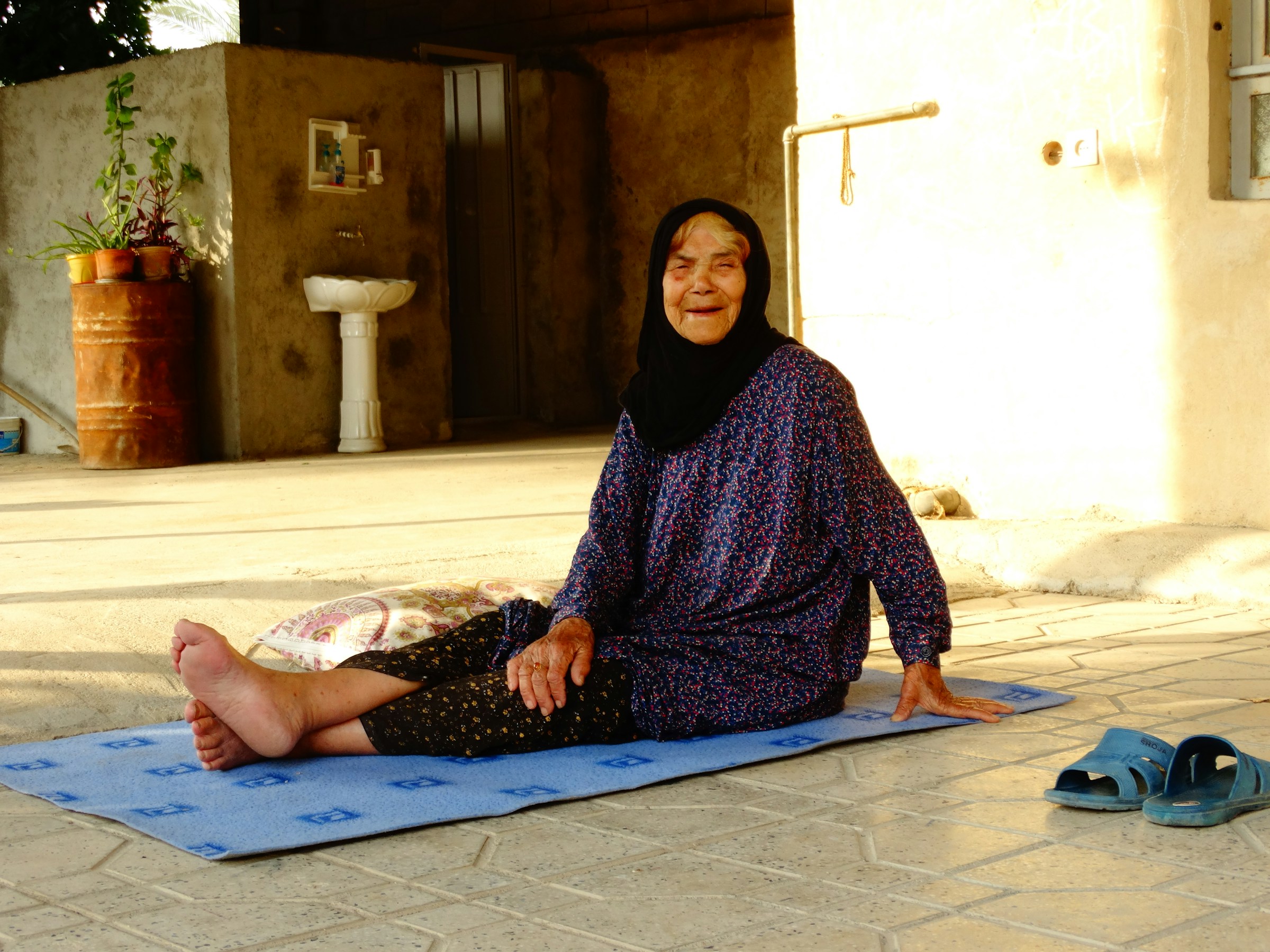
Aging is a series of dynamic lifestyle processes that produce diverse physiological changes. While aging is often characterized by mental or physical decline, new research highlights strategies to enhance healthy aging and mitigate loss of cognitive functions. These alternative outcomes can be found outside of Western pharmacology through integrated, holistic, and accessible care options such as yoga.
Yoga’s origins remain a highly contested subject among scholars. Some researchers have proposed that proto-yogic practices can be traced to the Indus Valley Civilization (c. 2500 BCE), referencing artifacts such as the Pashupati Seal, which displays a figure demonstrating possible meditative poses and āsanas. Other scholars favor a gradual development model of yoga’s origins rather than a single point of invention. This perspective suggests that yoga evolved over centuries of knowledge exchange between Vedic ritual culture, the philosophical teachings of the Upanishads, and the śramana traditions associated with early Hindu, Buddhist, and Jain practices. Despite scholarly debate, these traditions collectively inform contemporary yoga practices, characterized by meditation, breath control, self-discipline, and spiritual liberation. Such components of yoga can be traced to the Yoga Sutras of Patanjali, developed between 200 BCE and 400 CE, which formalized a series of principles that serve as the framework of Classical Yoga.
This practice hinges upon bodily and spiritual unity, in which physical health, mental clarity, ethical conduct, and spirituality are aligned. This idea of yoga, both traditionally and currently, is associated with preventative care, aiming to implement long-term wellness and maintain or restore one’s inner state of balance. Within this knowledge system, health and well-being are understood as a dynamic equilibrium centered on harmonious living.
Yoga can be practiced through a multitude of modalities, accommodating to a variety of lifestyle factors. Science has begun to recognize the widespread healing potential of yoga in aging populations. Although popularly regarded solely as a physical activity for strength, balance, and flexibility, yoga can serve as an equivalent mental exercise, simultaneously supporting cognitive function and mental acuity. As a popular and accessible traditional practice, yoga is beginning to bridge gaps in medicine by offering holistic and nonpharmacological alternatives to anti-aging interventions. This review highlights five studies that substantiate the potential for yoga to be a positive moderator in healthy cognitive aging in older adults.
The first study evaluated the effectiveness of Hatha yoga—a slow, balanced, and breath-focused flow—in improving the cognitive health of 45 older adults, including attention, memory, and reasoning skills. Participants were divided among three trial groups: regular guided yoga sessions, other forms of physical activities, and a non-physically active control group. The yoga group experienced significantly greater improvements across all cognitive categories. Although the study was limited by its small sample size, the authors concluded that yoga-based healthcare interventions are an effective and holistic approach to maintaining and stimulating cognitive health in older adults. Their findings support yoga as a nonpharmalogical intervention that can improve the mental quality of life in elderly populations.
The second study examined the differential effects of Kundalini yoga (focused on spirituality and internal awareness) and memory enhancement training (MET) on hippocampal connectivity in older women with self-reported memory decline and cardiovascular risk factors for Alzheimer’s disease. The authors discovered that Kundalini yoga was associated with increased connectivity between a left anterior hippocampal subregion and ventral visual stream regions: areas of the brain linked to reduced perceived stress. It is hypothesized that Kundalini yoga’s combination of breathwork, movement, and mindfulness facilitates the processing of emotional content. Alternatively, MET increases connectivity between posterior hippocampal subregions and default mode/frontoparietal networks: regions that reduce frequency of forgetting information and experiences. This study provides compelling evidence that suggests that, together, Kundalini yoga and MET interventions may be beneficial for cognitive health and offer complementary benefits for stress management and memory acuity.
The third article compared the effects of Hatha yoga and cued, high-speed yoga on the cognitive performance of 21 older adults. Cued yoga differs from traditional Hatha yoga by integrating visual and auditory cues into the practice. Participants completed several neuropsychological assessments before and after a trial period. They were randomly assigned to one of two groups: one group participated in three Hatha yoga sessions per week for 24 weeks, while the other group completed three cued yoga sessions per week for the same duration. The study reported improved cognitive test scores in both groups. However, participants in the cued yoga group showed greater improvements in retaining verbal information. This study concluded that both forms of yoga may be valuable tools for enhancing memory and reducing age-related cognitive decline.
The fourth article reviewed how traditional yoga practice can offer holistic mind-body support for the WHO’s Decade of Health Aging criteria, including changing attitudes toward aging, creating age-friendly environments, delivering integrated and person-centred care, and ensuring access to long-term care. The authors used existing evidence to suggest that yoga improves memory, attention, executive function, stress regulation, and depressive symptoms while reducing risk factors associated with cognitive decline. The authors also called for expanding the evidence base for yoga healing and increasing accessibility for older adults through subsided community projects and tele-yoga programs.
The fifth study reviewed non-pharmacological mechanisms that offer neurobiological and anti-aging benefits, with a focus on holistic practices such as yoga and meditation. One section highlighted the mental and cognitive benefits of yoga, centered on stress reduction and enhanced memory, focus, mental agility, neuroplasticity and resilience as primary components that may produce anti-aging outcomes. The review underscored that yoga can support overall cognitive health and, therefore, potentially slow the aging process.