

Center for Traditional Medicine

CTM Curated Research

Shamanic Healing in Contemporary Healthcare: A Review of Applications and Beneficial Outcomes

Shamanic practices employ spiritual elements, altered states of consciousness, and culturally grounded ceremonies to perform services such as healing, divination, and guidance. Although Shamanism in numerous forms has been practiced for millennia, clinical evidence remains limited, shamanism is experiencing worldwide cultural revitalization as neo-shamanism, suggesting potential applications as both an autonomous and integrative healing intervention.

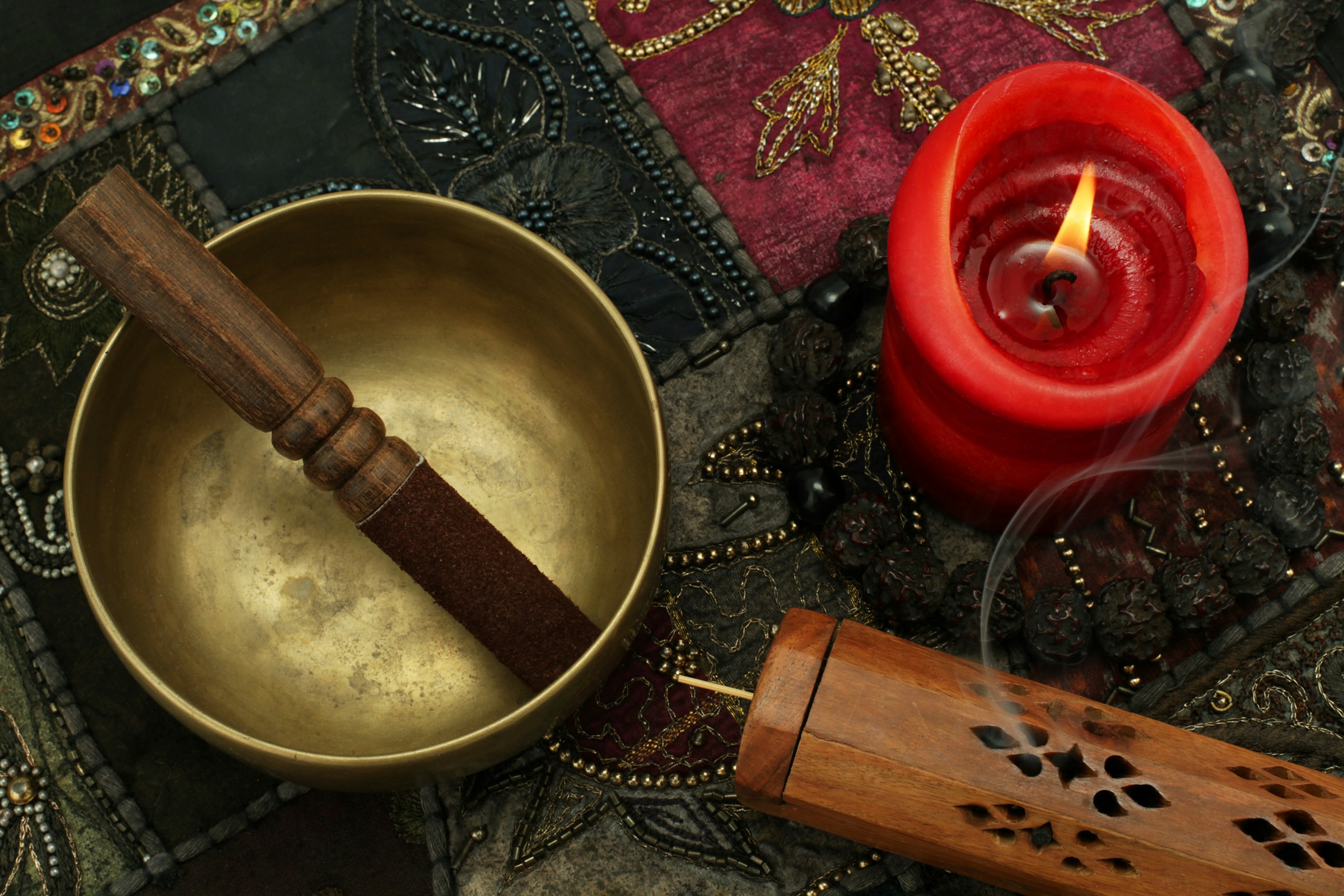
A singing bowl, candle, and incense: three items often used in Shamanic healing ceremonies.
A singing bowl, candle, and incense: three items often used in Shamanic healing ceremonies. Photo by Magic Bowls on Unsplash.

Shamanism is a non-dogmatic spiritual worldview practiced by shamans, or shamanic practitioners, worldwide. The English word shaman derives from the Russian šamán, which was borrowed from the Evenki language of Siberia.  Although the term became widely used in anthropology as a general label for spirit-mediated healing specialists,  Indigenous communities prefer their own culturally specific names for these roles. The term shaman was first introduced to scientific research by Mircea Eliade, a professor of the history of religion. Shamanism is grounded in the belief that everything is interconnected through a web of energy. Shamans serve as intermediaries between the physical world and spirit realms, entering altered states of consciousness to channel spiritual energy.

Shamanic healing focuses on balance and the connection between physical and spiritual ailments. Healing practices explore the spiritual elements that contribute to illness and often reconnect individuals with their spiritual guardian to restore personal energy or vitality. Shamans commonly induce altered states of consciousness through fasting, dancing, psychedelic plants, and meditation to facilitate healing. Among some Siberian traditions, shamans serve as ritual specialists who perform soul-restoration rites for individuals believed to have experienced soul loss following illness, fright, or trauma. In certain Siberian traditions, ritual specialists use entheogens such as Amanita muscaria to support visionary experiences, healing, and communication with the spirit world.

Although clinical research is limited, shamanism is experiencing a global revival in the form of neo-shamanism. Western interest in psychedelic plant medicine and spiritual healing continues to expand, often driven by social media networks, digital accessibility, and online rituals and teachings for broader audiences. Winkelman (2021) views neo-shamanism not as a direct continuation of any single Indigenous tradition, but as a modern synthesis that selectively incorporates cross-cultural shamanic practices into contemporary spiritual and therapeutic frameworks. The following five articles examine shamanic research topics, including clinical efficacy and the role of altered states of consciousness in offering potential insights into the regulation of psychosis.

Winkelman, M. (2021). The Evolved Psychology of Psychedelic Set and Setting: Inferences Regarding the Roles of Shamanism and Entheogenic Ecopsychology. Frontiers in Pharmacology, 12, 619890. https://doi.org/10.3389/fphar.2021.619890

The first article reviewed 16 studies exploring clinical data on shamanic healing practices as a primary intervention. These practices included both physical (e.g., needle insertion or the ingestion of bell clappers) and spiritual (e.g., chanting and ASC) approaches used to treat a range of mental/emotional, physical, and spiritual conditions. Three qualitative studies reported significant health benefits, including improved quality of life and reduced pain. Supportive beliefs and culturally contextualized ceremonies likely contributed to these outcomes, including a reduced need for pain medication, fewer nightmares, and lower anxiety levels. Although this article concluded that clinical research on shamanic healing remains limited, the current evidence suggests promising potential for its integration into clinical settings, particularly for stress reduction and increasing feelings of calmness and satisfaction with care. Shamanic healing may also offer a culturally appropriate approach to care for patients whose cultures are grounded in shamanic, spiritual, or religious belief systems. 

The second study emphasized the importance of altered states of consciousness (ASC) in shamanic healing. ASC is characterized by changes in thinking, time awareness, control, emotional expression, body image, and perception of one’s environment. These experiences are often elicited through sensory deprivation or amplification, intentional focus, or somato-psychological factors. The authors proposed that shamanic training may function as a culturally informed method for managing ASC, which often resembles psychological crises. Shamanic practices provide social support, validate individuals’ experiences, and teach regulation of altered states, offering potential insights into the broader promotion of mental well-being. The study suggested that these methods could be applied to modern psychiatric treatment, providing alternative spiritual interventions for individuals at risk for psychosis. The authors concluded that shamanic training may help individuals develop greater control over ASC and their potential effects on mental health.

The third article used high-intensity electroencephalography (EEG) to examine the neural correlates of shamanic trances in 24 shamanic practitioners and 24 control participants during rest, shamanic drumming, and classical music listening. The study also included an assessment of altered states of consciousness (ASC) to examine the relationship between shamanic trance and psychedelic-induced alterations of consciousness. Findings showed that shamanic practitioners differed significantly from controls in both brain activity measures and ASC questionnaire scores during drumming. Furthermore, these differences were similar to or greater in magnitude than those reported by individuals experiencing drug-induced ASC. The authors concluded that psychedelic drug-induced and non-pharmacologic (shamanic trance) alterations in consciousness share overlapping phenomenal traits while remaining distinct states of consciousness. These findings suggest that, despite common experiential elements such as inner awareness or visionary imagery, the two states are associated with different patterns of brain activity. 

The fourth study developed a structured and replicable shamanic treatment plan for veterans with PTSD. The authors used this protocol to explore PTSD-related outcomes while analyzing the feasibility and potential adverse effects of shamanic healing as a treatment strategy. The intervention incorporated several shamanic practices, including rapport-building, power- animal retrieval, extraction, compassionate spirit release, soul retrieval, forgiveness, and divination. Of the six veterans enrolled in the study, four completed the treatment series, all of whom reported improvements in quality of life. Three participants also experienced reductions in PTSD symptoms. Despite the limited sample size, the protocol was found to be both feasible and acceptable. Findings indicated that intensity and duration of trauma had the greatest influence on treatment outcomes. Moreover, participants who reported earlier onset of trauma and more severe symptoms demonstrated more modest improvements. The authors concluded that their structured shamanic healing plan may represent a promising alternative intervention for PTSD, although larger studies are needed to properly evaluate its efficacy. 

The fifth study reviewed clinical findings suggesting that shamanic healing may reduce self-reported pain and improve quality of life in individuals with temporomandibular disorders (TMD). These disorders are characterized by joint irregularities, inflammation, and pain. Three studies were reviewed, all of which included only female participants. Across all studies, participants reported that shamanic healing interventions produced improvements in quality of life and management of TMD-related symptoms. One study documented improvements in sleep, energy levels, digestion, back pain, feelings of calmness, and overall peace. Additional findings indicated that shamanic healing significantly reduced self-rated TMD pain scores up to nine months after the treatment, suggesting long-lasting benefits.  Collectively, the evidence demonstrates that shamanic healing may be a promising intervention for pain management among individuals with TMD. The authors recommend that future research include larger, more diverse participant samples and long-term follow-up assessments to better evaluate the longevity of treatment outcomes.

Tags: altered state of consciousness, community healing, Indigenous knowledge, integrative healing, mental health, neo shamanism spiritual healing, pain relief, physical health, psychedelic healing, PTSD, Shaman, Shamanic healing, Shamanism, spiritual health, traditional healing

Research Glossary

Research has its own vocabulary. To help you decipher research, we created a Glossary to ease the way.
You may access it here: Research Glossary

Referenced Research Publications

Journal of Restorative Medicine
2025, November 22

Shamanism as a Clinical Intervention: A Scoping Review

Abstract

Background

Shamanism is a transcultural, heterogeneous worldview that is primarily concerned with human interaction with the spirit world. Foremost among the many services provided by practitioners of shamanism is the healing of the mind, body, and spirit.

Method

While most literature on shamanism consists of ethnographies of cultures that practice shamanism, the present literature search was performed to review existing medical literature of shamanic healing as a clinical intervention.

Results

Sixteen publications met the inclusion criteria, encompassing 1 clinical trial, 2 case series, and 10 case reports.

Conclusions

Our findings demonstrate that shamanic healing as an intervention has potential benefits and a relatively low risk of harm, and is feasible to investigate as a clinical intervention. Further research is warranted to better elucidate its benefits.

Reference

Hicks, Matthew, and Richard Harris. “Shamanism as a Clinical Intervention: A Scoping Review.” Journal of Restorative Medicine 15, no. 1 (2025): 54–62. https://doi.org/10.14200/jrm.2025.0005.

Religion, Brain & Behavior
2023, November 24

Shamanism: Psychopathology and Psychotherapy

Abstract

The cross-cultural practice of shamanism reflects an innate capacity for altered states of consciousness (ASC’s) that are elicited by stress, deliberately sought in shamanic rituals, and associated with psychopathology. Shamanic sickness, animal transformation, and death-rebirth experiences specifically resemble psychotic experiences. The triggers of shamanic and psychotic experiences are also related, but while psychotic experiences endure and intensify under uncontrollable circumstances, shamanic sickness is ameliorated by ritualized and controlled engagement of ASC. Shamanic vocation, when and where it is culturally accepted, does not lead to progressive deterioration or dysfunction but rather to an increased functional capacity as expert healer, teacher, and ritual guide. Shamanic training methods, or other controlled and ritual methods of engaging ASC, may inform strategies for promoting mental well-being.

Reference

Brouwer, Ari, Michael James Winkelman, and Charles L. Raison. “Shamanism: Psychopathology and Psychotherapy.” Religion, Brain & Behavior 15, no. 1 (2023): 26–43. https://doi.org/10.1080/2153599X.2023.2258212

Frontiers in Human Neuroscience
2021, March 17

Neural Correlates of the Shamanic State of Consciousness

Abstract

Psychedelics have been recognized as model interventions for studying altered states of consciousness. However, few empirical studies of the shamanic state of consciousness, which is anecdotally similar to the psychedelic state, exist. We investigated the neural correlates of shamanic trance using high-density electroencephalography (EEG) in 24 shamanic practitioners and 24 healthy controls during rest, shamanic drumming, and classical music listening, followed by an assessment of altered states of consciousness. EEG data were used to assess changes in absolute power, connectivity, signal diversity, and criticality, which were correlated with assessment measures. We also compared assessment scores to those of individuals in a previous study under the influence of psychedelics. Shamanic practitioners were significantly different from controls in several domains of altered states of consciousness, with scores comparable to or exceeding that of healthy volunteers under the influence of psychedelics. Practitioners also displayed increased gamma power during drumming that positively correlated with elementary visual alterations. Furthermore, shamanic practitioners had decreased low alpha and increased low beta connectivity during drumming and classical music and decreased neural signal diversity in the gamma band during drumming that inversely correlated with insightfulness. Finally, criticality in practitioners was increased during drumming in the low and high beta and gamma bands, with increases in the low beta band correlating with complex imagery and elementary visual alterations. These findings suggest that psychedelic drug-induced and non-pharmacologic alterations in consciousness have overlapping phenomenal traits but are distinct states of consciousness, as reflected by the unique brain-related changes during shamanic trance compared to previous literature investigating the psychedelic state.

Reference

Huels, Emma R., Hyoungkyu Kim, UnCheol Lee, et al. “Neural Correlates of the Shamanic State of Consciousness.” Frontiers in Human Neuroscience 15 (March 2021). https://doi.org/10.3389/fnhum.2021.610466.

Explore NY
2017, February 24

Shamanic Healing for Veterans with PTSD: A Case Series

Abstract

Context

Posttraumatic stress disorder (PTSD) is a serious health concern. Current evidence-based treatments for PTSD are efficacious; however, they are not appropriate or tolerated by everyone who needs them. Alternative treatment approaches are needed. Shamanic healing is one such therapy that may potentially be beneficial but no systematic research has been conducted on it for PTSD.

Objective

The objectives of the case series are to (1) develop a structured replicable shamanic treatment plan for veterans with posttraumatic stress disorder (PTSD); (2) collect preliminary data on PTSD-related outcomes, and (3) explore the feasibility and potential for adverse events of the plan.

DesignCase series.

Setting

Clinical.

Patients or Other Participants

Veterans with PTSD.

Intervention

Shamanic healing.

Main Outcome Measure(s)

PTSD symptoms, quality of life, and piritual wellness.

Results

A semi-structured shamanic healing protocol was created with the following components: rapport building, power animal retrieval, extraction, compassionate spirit release, curse unraveling, soul retrieval, forgiveness/cord-cutting, aspect maturing/soul rematrixing, and divination. Six veterans enrolled in the study (mean age = 49.3 ± 13.1). Qualitative descriptions of the participants, their histories, and effects from the intervention are reported. Preliminary data was collected on PTSD-related outcomes. The protocol was found feasible and acceptable and recommendations for its future use are suggested. Future research is warranted and needed to evaluate the efficacy of shamanic healing as a potential therapy for veterans with PTSD.

Reference

Wahbeh, Helané, Lauri Shainsky, Angela Weaver, and Jan Engels-Smith. “Shamanic Healing for Veterans with PTSD: A Case Series.” Explore (New York, N.Y.) 13, no. 3 (2017): 207–17. https://doi.org/10.1016/j.explore.2017.02.003.

Journal of Religion and Health
2023, June 3

Antinociceptive Efficacy of Shamanic Healing for the Management of Temporomandibular Disorders: An Evidence-Based Review

Abstract

The aim of this evidence-based review was to assess the antinociceptive efficacy of shamanic healing (SH) for management of temporomandibular disorders (TMD). The addressed focused question was “Is SH effective for the management of TMD?” Indexed databases were searched without time and language restrictions up to and including January 2023 using the following keywords: “disc displacement disorders”; “healing”; “inflammation”; “pain”; “shamanic”; “therapy”; “temporomandibular joint”; “temporomandibular disorders” and “temporomandibular joint disorders”. Clinical studies were considered eligible for inclusion. Editorials, case-reports, case-series and commentaries were excluded. Literature search was performed in accordance with the guidelines of the preferred reporting items for systematic review and meta-analysis. Pattern of this evidence-based review was customized to summarize the pertinent information. In the present review, three studies were included and processed for data extraction. All participants were females with a mean age of 38.3 ± 8.3 years (range 25–55 years). Self-rated pain was assessed before application of SH (baseline) and after 9 months of follow-up. In one study, SH significantly reduced self-rated TMD pain scores (P < 0.001) at 9-months’ follow-up interview. In all studies patients reported that management of TMD via SH helped improve their quality of life. In one study patients perceived improvements in sleep, energy levels, digestion, and back pain at follow-up. In another study patients reported that they felt “calmer” and “at peace” at follow-up interview. The possible contribution of SH for managing pain among TMD patients warrants additional research. There is a dire need for well-designed and power-adjusted randomized clinical trials with adequate groups and long-term follow-up.

Reference

Ganem, Atheer, P. Emile Rossouw, Dimitrios Michelogiannakis, and Fawad Javed. “Antinociceptive Efficacy of Shamanic Healing for the Management of Temporomandibular Disorders: An Evidence-Based Review.” Journal of Religion and Health 63, no. 2 (2024): 942–53. https://doi.org/10.1007/s10943-023-01844-1.